


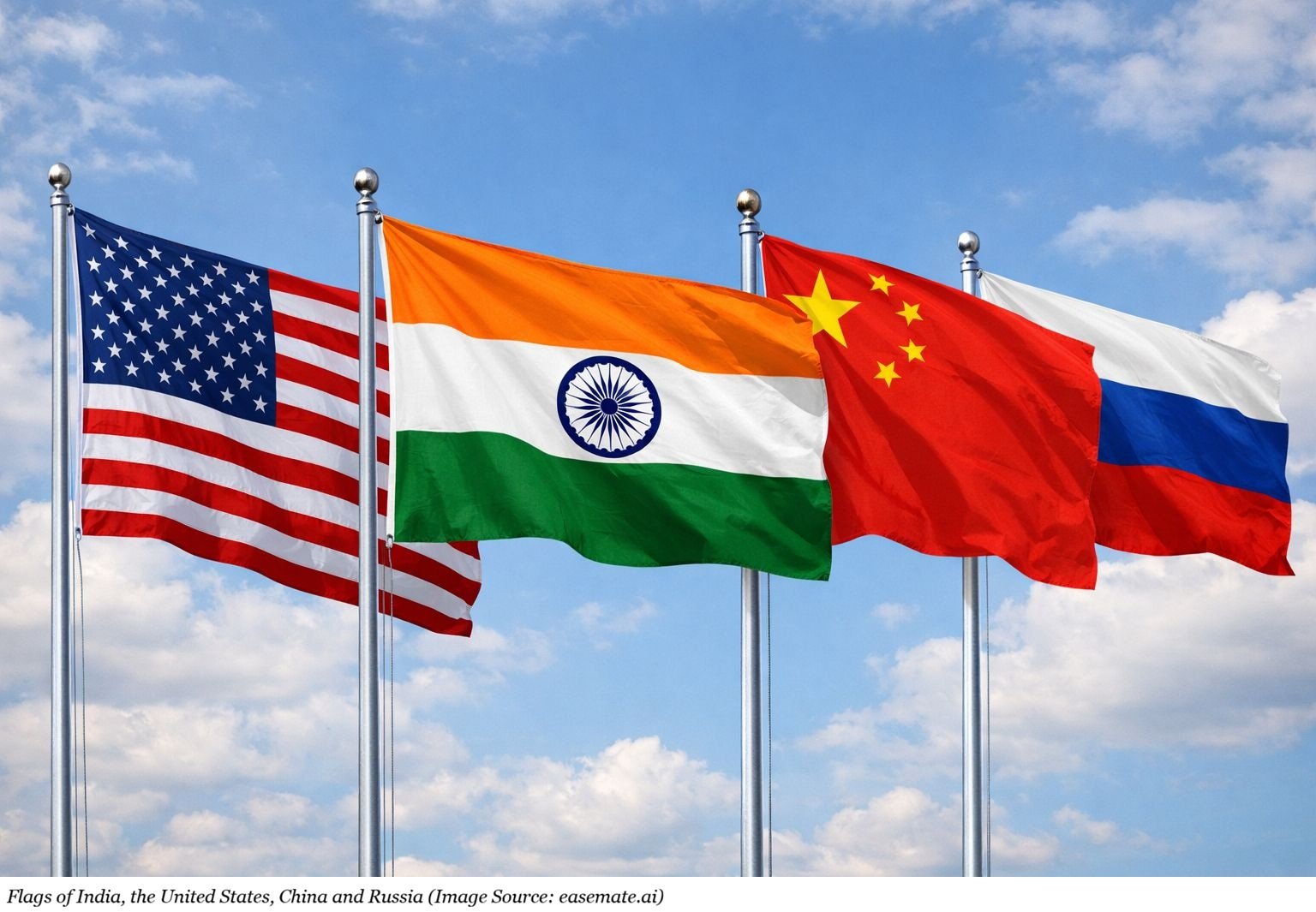
The global political and economic system is undergoing a major transformation. For many decades, international politics was dominated by one or two major powers. However, in recent years, the world has been moving toward a multipolar order, where multiple countries share power and influence. In this emerging system, has emerged as an important global player. Through economic growth, diplomatic engagement, strategic partnerships, and leadership in global institutions, India is playing a crucial role in shaping the modern multipolar world order.
Understanding the Multipolar World Order
A multipolar world refers to a global system where power is distributed among several major countries rather than being concentrated in one or two dominant powers. Earlier, after the Cold War, the dominated global politics, creating a unipolar system. However, the rise of countries such as China, India, and other emerging economies has shifted the balance of power.
This transition reflects changes in global economic strength, military capabilities, and diplomatic influence. The multipolar world aims to create a more balanced and cooperative international system where multiple countries contribute to global decision-making.
Economic Growth and Global Influence
India’s rapid economic development is one of the primary reasons for its increasing global importance. India is currently one of the fastest-growing major economies in the world. According to international economic reports, India became the world’s fifth-largest economy in 2023, surpassing the United Kingdom. India’s GDP growth has remained strong, averaging around 6–7% annually in recent years.
India is expected to become the third-largest economy globally by 2030. This economic growth has strengthened India’s position in global trade, investment, and technological development. India is also an important hub for information technology, pharmaceutical production, and service industries, which contribute significantly to global markets.
Additionally, India plays a major role in global supply chains and digital transformation. The country’s expanding manufacturing sector and initiatives such as “Make in India” aim to increase domestic production and reduce dependence on foreign imports. These economic developments increase India’s influence in the global economic system.
Strategic and Diplomatic Leadership
India has adopted a balanced and independent foreign policy, often described as “strategic autonomy.” Instead of aligning completely with any single global power, India maintains strong relations with multiple countries. This diplomatic approach allows India to cooperate with Western countries, Russia, and developing nations simultaneously.
India actively participates in global organizations such as the United Nations (UN), where it advocates for reforms that provide greater representation for developing countries. India has consistently demanded permanent membership in the UN Security Council, arguing that current global structures do not reflect modern geopolitical realities.
India also plays a leading role in the G20 , which includes the world’s major economies. During its G20 presidency in 2023, India promoted global cooperation on economic stability, climate change, and digital transformation. India emphasized inclusive development and highlighted the concerns of developing nations, strengthening its leadership role in global governance.
Role in Global South and Development Cooperation
India is often considered a strong voice for the Global South, representing the interests of developing countries in international forums. India provides development assistance, infrastructure support, and technological cooperation to many countries in Africa, Asia, and Latin America.
Through initiatives such as capacity-building programs, digital infrastructure development, and humanitarian assistance, India promotes economic growth and stability in partner nations. India’s vaccine diplomacy during the COVID-19 pandemic demonstrated its commitment to global public health by supplying vaccines to numerous developing countries.
India’s development partnerships enhance its global influence and strengthen diplomatic ties with emerging economies, contributing to the multipolar global structure.
Participation in Multilateral and Strategic Alliances
India plays an important role in international alliances and regional partnerships. It is a founding member of BRICS, which includes Brazil, Russia, India, China, and South Africa. BRICS aims to promote economic cooperation among emerging economies and reduce dependence on Western-dominated financial institutions.
India is also part of the Quad (Quadrilateral Security Dialogue), which promotes security cooperation and stability in the Indo-Pacific region. Through such alliances, India contributes to maintaining regional security and balancing global power structures.
India’s participation in multiple international organizations demonstrates its commitment to multilateral cooperation and collective global leadership.
Military Strength and Security Role
India’s growing military capabilities also strengthen its role in the multipolar world order. India has one of the largest armed forces in the world and continues to modernize its defence systems. The country invests heavily in defence technology, naval expansion, and space research.
India plays a significant role in maintaining stability in the Indo-Pacific region, which is strategically important for global trade and maritime security. India also contributes actively to UN peacekeeping missions, making it one of the largest contributors of peacekeeping troops globally.
By strengthening its defence capabilities, India enhances its ability to protect national interests and contribute to international security.
Technological Advancement and Soft Power
India’s growing technological sector is another factor increasing its global influence. India is a global leader in software development, digital payment systems, and space research. Organizations such as the Indian Space Research Organisation have achieved significant success in satellite launches and planetary exploration.
India’s cultural influence, democratic political system, and large diaspora community also contribute to its soft power. Indian cinema, yoga, and traditional medicine systems have global popularity, enhancing India’s international image.
Challenges Facing India
Despite its rising influence, India faces several challenges. Economic inequality, infrastructure gaps, and unemployment remain domestic concerns. Additionally, geopolitical tensions with neighbouring countries and global strategic competition require careful diplomatic management.
India must also balance relations between major global powers such as the United States and China while protecting its strategic independence. Managing these challenges is essential for India to sustain its global leadership role.
Future Prospects
India’s demographic strength, technological innovation, and economic growth provide strong potential for future global leadership. With one of the world’s largest youth populations, India has significant human resource potential. Government initiatives focusing on digital infrastructure, renewable energy, and manufacturing expansion aim to strengthen India’s global competitiveness.
Experts believe India will continue to play a key role in shaping global economic policies, regional security structures, and international cooperation frameworks. As the multipolar world evolves, India’s influence is expected to expand further.
Conclusion
India’s rise as a major global power reflects the changing nature of international politics. Through economic development, diplomatic leadership, strategic alliances, and technological innovation, India is contributing significantly to the formation of a multipolar world order. India’s balanced foreign policy and commitment to multilateral cooperation strengthen global stability and development.
Although India faces economic and geopolitical challenges, its growing influence ensures that it will remain an important global actor in the future. India’s role highlights the increasing importance of emerging economies in shaping global governance and international relations.