International Organizations / Global Issues

Iran: The Unease of a Certain Intellectual Segment of Europe

In part of the European debate concerning Iran, there is something extremely disturbing. How to understand that some analysts, intellectuals, politicians, in the name of democracy or international law, oppose the offensive led by the United States and Israel, while the power of the mullahs is among the most repressive in the region? How to explain this caution, mixed with a certain indulgence? With regard to a regime that oppresses its population, intensifies executions, and has inscribed its...

Behind Iran, the Chinese Front

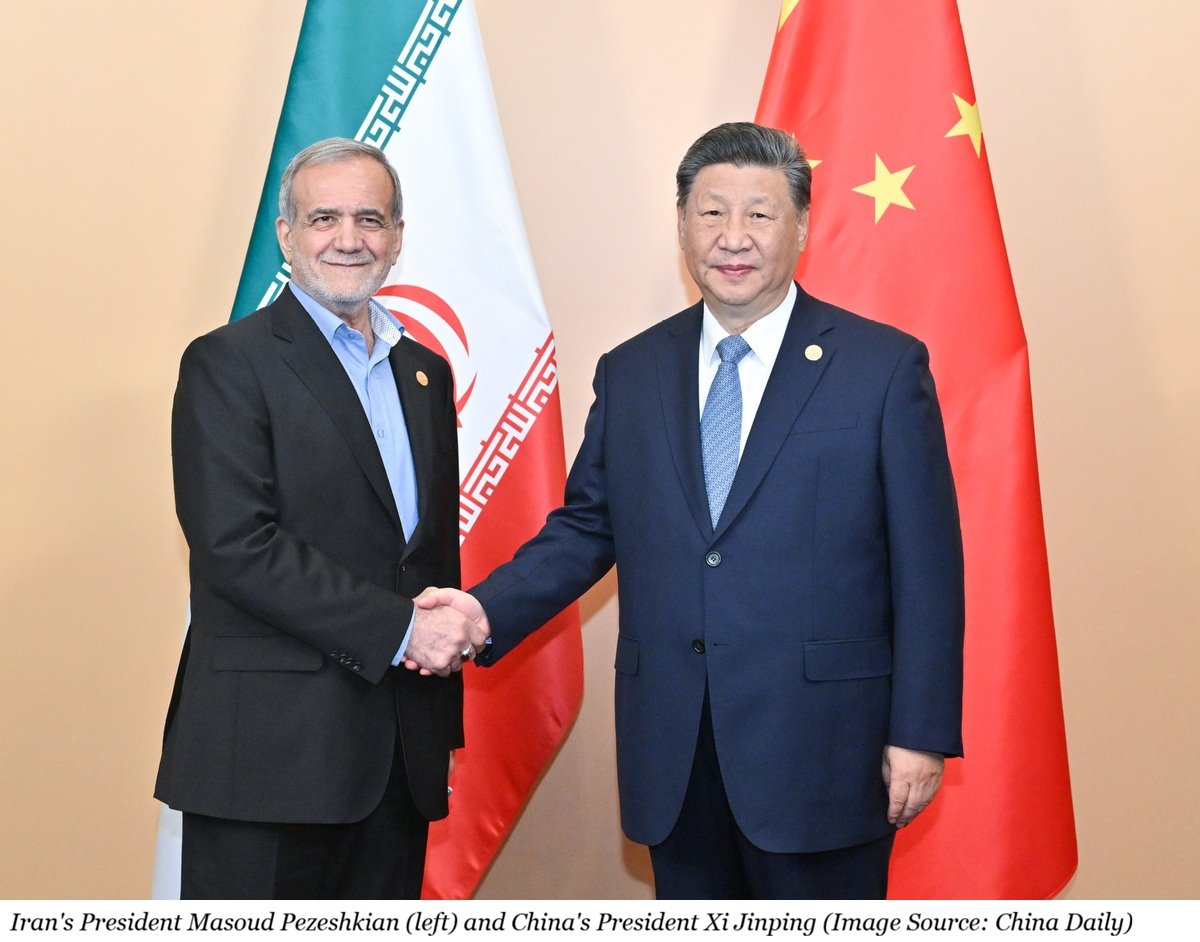
At first glance, the war by the United States (US) against the Iranian mullahs seems to follow a strictly Middle Eastern logic: weakening a hostile regional power, damaging its military structure, protecting Washington’s allies, and restoring deterrence. But this reading, while partly true, is incomplete. Behind the visible clash between Washington and Tehran, a broader fault line is emerging: the growing rivalry between the US and China. Iran is not only an enemy of the US; it is also one ...

The Impact of Digital Diplomacy

Digital diplomacy, often referred to as e-diplomacy or cyber diplomacy, is the use of digital technologies, social media platforms, and the internet by governments and diplomats to conduct diplomatic communication, public outreach, and international relations. In the era of globalization and rapid technological advancement, diplomacy has expanded beyond traditional face-to-face negotiations and official diplomatic channels. Governments, international organizations, and diplomats now use digit...

The Role of International NGOs

International Non-Governmental Organizations (INGOs) play a crucial role in addressing global challenges and promoting social, economic, and environmental development. These organizations operate independently from governments and are usually non-profit in nature. They work across national boundaries to provide humanitarian aid, support human rights, promote sustainable development, and assist communities affected by disasters or conflicts. With globalization increasing interdependence among ...

The Future of the World Trade Organization

The World Trade Organization (WTO), established in 1995 under the Marrakesh Agreement, is the principal international institution that governs global trade. Over the past three decades, it has provided a rules-based multilateral forum for negotiating trade agreements, managing tariff reductions, and settling disputes among its 160+ member states. However, rapid technological change, rising geopolitical tensions, and structural challenges have put the WTO at a pivotal crossroads, necessitating...

Reform of the United Nations Security Council

The United Nations Security Council (UNSC) is one of the most powerful bodies in global governance. Established in 1945 under the United Nations (UN), its primary responsibility is to maintain international peace and security. However, more than seventy-five years after its creation the structure and functioning of the Security Council have come under increasing scrutiny. Many member states argue that the Council no longer reflects contemporary geopolitical realities and requires comprehensiv...

When Tehran Loses the Gulf

Iran’s response after February 28, 2026 may have created the opposite effect: it pushed Gulf states—carefully and often quietly—toward a de-facto security alignment with Washington, and indirectly with Israel.

On February 28, 2026, the joint US–Israeli strike on Iran opened a new phase that goes beyond the military battlefield. It also reshaped the political map of the crisis. By responding in ways that threatened Gulf territory and Gulf interests, Tehran turned several Gulf nei...

The Impact of Global Migration on International Relations

Global migration refers to the movement of people across international borders for reasons such as employment, education, safety, or better living conditions. In today’s interconnected world, migration has become one of the most significant factors shaping international relations. It influences diplomacy, economic cooperation, security policies, and cultural exchange between countries. Migration can strengthen ties bet...

How International Relations Affect the Global Gender Equality Movement?

Gender equality is one of the most important human rights issues in the modern world. It refers to the state in which individuals of all genders have equal rights, responsibilities, and opportunities. The global gender equality movement seeks to eliminate discrimination against women and girls and promote equal participation in political, economic, and social life. However, this movement does not operate within ...

Impact of Artificial Intelligence on Warfare

Artificial Intelligence (AI) is changing the face of war, international relations, and the market of military equipment. It is seen as a transformation that is not just technical, as it affects strategy, poses ethical and legal challenges, and brings huge questions of arms races of a new kind.

Uses of AI in the Battlefield

Perception and Targeting

AI systems a...

Tariffs between the United States and India: Where Economics Meets International Relations

Tariff issues between the United States (US) and India have been one of the leading factors governing bilateral and economic diplomacy, along with broader international relations. As two of the world's largest democracies and major economies, the US and India share strategic interests in security, technology, and global governance. Despite growing cooperation, however, t...

India’s Role in a Multipolar World Order

The global political and economic system is undergoing a major transformation. For many decades, international politics was dominated by one or two major powers. However, in recent years, the world has been moving toward a multipolar order, where multiple countries share power and influence. In this emerging system, has emerged as an important global player. Through economic growth, diplomatic engagement, strategic partnerships, and leadership in global institutions, India is playing a crucia...

The Rise of China as a Global Superpower

In the 21st century, the global balance of power has undergone significant changes. Among these changes, the rise of China as a global superpower is one of the most important developments. Once considered a developing country, China has transformed into a major economic, political, and military force. Its rapid growth, strong industrial base, and increasing global influence have reshaped international relations and global trade systems. Today, China is widely recognized as one of the most pow...

The Future of the United Nations in Global Governance

The global political system is becoming more complex due to increasing conflicts, climate change, economic challenges, and health crises. In this changing global environment, the United Nations plays a major role in maintaining peace, promoting development, and encouraging cooperation between countries. Since its establishment in 1945, the United Nations has worked to prevent wars and solve global problems through dialogue and collective action. However, as global challenges continue to evolv...

India’s Prospective Trade Deal with the United States

In recent years, trade relations between India and United States (US) have grown rapidly, making the partnership one of the most significant bilateral economic relationships in the world. The proposed India–US Trade Deal is expected to further strengthen economic cooperation, increase trade volume, and promote investment between the two countries. This agreement reflects changing global economic dynamics and the growing importance of India as a major global market and manufacturing hub.

...

India’s Balancing Act Between the United States and Russia

India has traditionally pursued a foreign policy based on strategic autonomy, avoiding alignment with any single global power while maintaining friendly relations with multiple countries. This approach has allowed India to safeguard its national interests, maintain independence in decision-making, and assert itself as a major player on the global stage. In the contemporary geopolitical context, India faces a complex challenge: balancing its relations with the United States and Russia, two pow...

US–China Strategic Rivalry and the Future of a Multipolar World Order

The strategic rivalry between the United States and China has emerged as one of the most significant forces shaping contemporary international relations. In the post–Cold War era, the global system was largely dominated by the United States as the sole superpower. However, China’s rapid economic growth, expanding military capabilities, and growing diplomatic influence have challenged this unipolar structure. Unlike t...

The Russia–Ukraine War and the Transformation of the Global Security Order

The Russia–Ukraine war, which escalated into a full-scale invasion in February 2022, stands as one of the most significant geopolitical crises of the twenty-first century. Beyond its immediate humanitarian catastrophe and military destruction, the conflict has had far-reaching consequences for the global security order. It has challenged long-standing assumptions about peace in Europe, r...

The Invisible Sprint: How Iran's Nuclear Program Nears a Dangerous Threshold

A new, detailed analysis of Iran's nuclear activities reveals a program that is not just stagnant or inching forward—it is poised for a rapid sprint. The Institute for Science and International Security (ISIS), a Washington-based research group known for its technical assessments, has dissected the latest reports from the United Nations' nuclear watchdog. Their conclusion is stark: Iran has built the capacity to produce material for multiple nuclear weapons in a matter of weeks, all while i...

The World's Nuclear Power Plants in 2025: Steady Giants in a Changing Energy World

Every year, the World Nuclear Association (WNA) publishes its World Nuclear Performance Report—a detailed check-up on how the planet's nuclear power plants are doing. Based on the latest data available, this report for 2025 reveals a clear and powerful story: the world's existing nuclear reactors are performing with incredible reliability, proving they are essential for clean and secure electricity. However, this success is tempered by the slow progress in building new reactors where they a...

Prime Minister Welcomes Global Leaders to AI Impact Summit in Delhi

Prime Minister Shri Narendra Modi today welcomed the world leaders, captains of industry, innovators, policymakers, researchers, and technology enthusiasts from across the globe to the AI Impact Summit at Bharat Mandapam, New Delhi. 

The Summit, themed “Sarvajana Hitaya, Sarvajana Sukhaya — Welfare for All, Happiness for All”, reflects India’s commitment to harnessing Artificial Intelligence for human-centric progress and inclusive development.

The Prime Minister high...

China and Russia’s Quiet Calculus in the Trump Era

Since the crisis in Venezuela and the sending of elements from the US Navy off the coast of Iran while repression intensifies in Tehran, a question returns in strategic conversations: where are China and Russia? Why this restraint, this low tone, this impression of 'silence' when, in the blocs' imagination, Moscow and Beijing should take center stage, denounce Washington, and show massive support to their partners?

The answer is simple and disturbing: China and Russia are not silent bec...

The Supply Chain Aftershocks of the Red Sea Crisis: Mapping Asia–Europe Trade Reroutes

Maritime chokepoints have repeatedly reshaped global trade—from the 1956 Suez Crisis that shut the canal for nearly five months, cutting off two-thirds of Europe’s oil supplies Imperial War Museums to the week-long Ever Given blockage in March 2021, which held up US $9 billion of goods per day. The present Red Sea crisis is markedly different: beginning in December 2023, sustaine...

Energy Gentrification: From Colonial Borders to Cloud Empires

This piece aims to shed light on how data—and the physical infrastructure supporting it—shape international relations and foreign policy worldwide. In this day and age governments and Big Tech are choosing the path to further deepening the effects of energy gentrification while further polluting space and our planet’s ground, waters and atmosphere. As the Sustainability directory frames, energy gentrification is; “a socio-spatial process characterized by the displacement or marginaliz...

Digital Inequality as a Security Threat: A Human-Centred Policy Framework for the Global South

Following the COVID-19 pandemic and rapid digital transformation, the Global South has reached a crossroads. Digital technologies have changed society, but they have also exacerbated existing disparities. Rural schoolchildren cannot attend online classes, and underfunded healthcare systems lack digital infrastructure, making digital exclusion more than just an inconvenience. It poses a direct threat to human development, institutional trust, and national security.

This article contends ...

A Non-Traditional Security Moment of BRICS: Southern Bloc’s Response to Its Insecurities

In 2001, a Goldman Sachs Economic Research Report titled, ‘Building Better Global Economic BRICs,’ explored the state of the world economy by emphasizing on the relationship between the G7 countries and the emerging economies of Brazil, Russia, India, and China. A modest group of emerging countries which formally came together in 2010, BRICS has remodelled itself as a revis...

With Friends Like These: BRICS, Kashmir, and the Politics of Enmity

All political actions and motives can be reduced to the friend-enemy distinction. This definition is owed to the German jurist Carl Schmitt, a controversial figure among the great names of 20th-century social sciences, who proposed to express, in a concrete and existential sense (in direct opposition to the spiritual-economic dilemma expressed by liberalism), the highest degree of intensity in a bond or a separation, an...

Global Warming is a Present Emergency, Not a Future Threat

In July 2023, the Earth recorded its hottest day in 1,25,000 years, according to scientists from the University of Maine. Oceans reached unprecedented temperature, wildfires raged across continents, and cities flooded within hours of heavy rain. These were not isolated disasters – they were climate warnings, screaming louder than ever before. Yet, despite scientific certainty and growing evidence, the world continues to respond with the same rehearsed lines: target, timelines, and promises....