


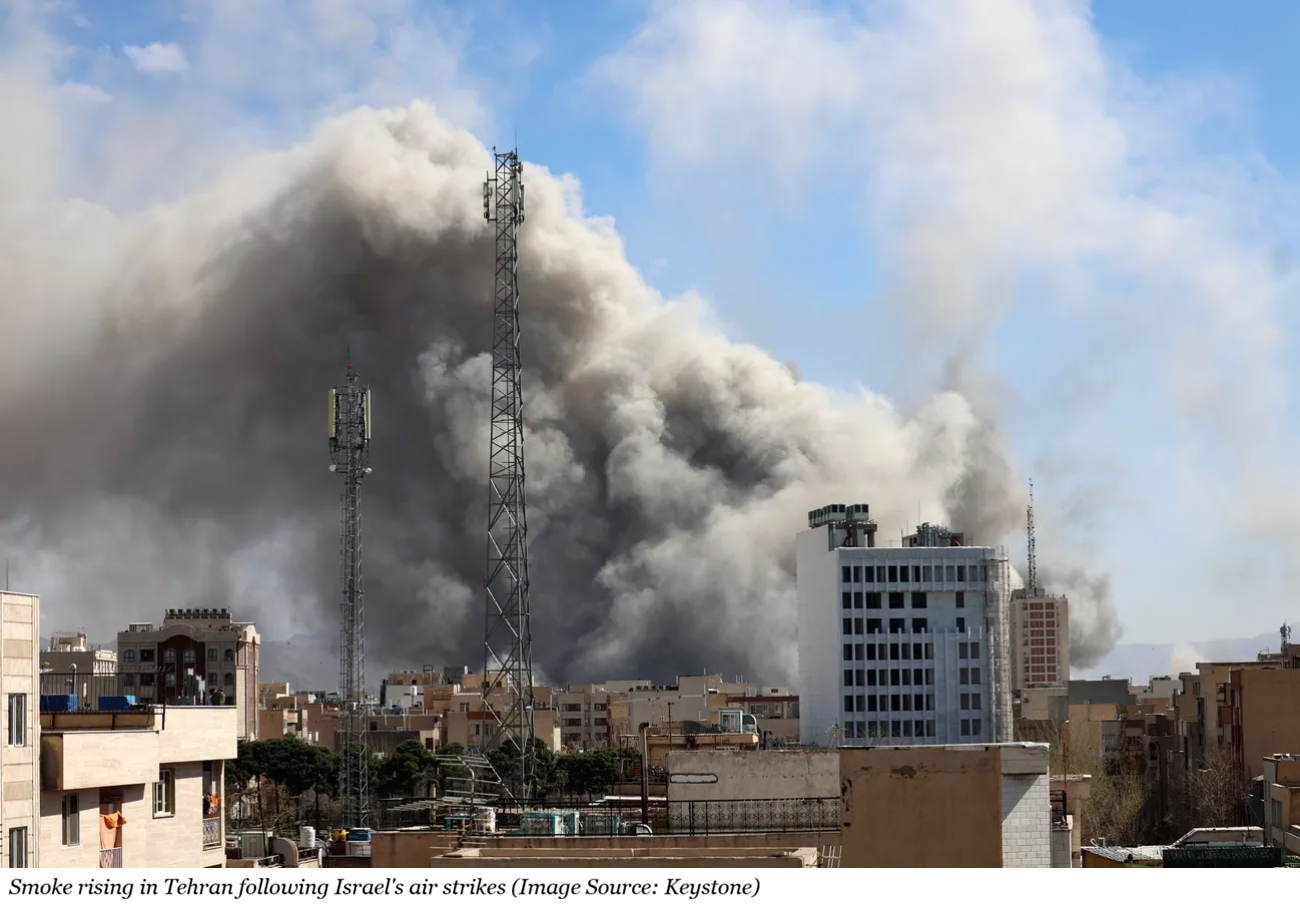
Iran’s response after February 28, 2026 may have created the opposite effect: it pushed Gulf states—carefully and often quietly—toward a de-facto security alignment with Washington, and indirectly with Israel.
On February 28, 2026, the joint US–Israeli strike on Iran opened a new phase that goes beyond the military battlefield. It also reshaped the political map of the crisis. By responding in ways that threatened Gulf territory and Gulf interests, Tehran turned several Gulf neighbors from balancers into exposed states—and exposed states usually seek protection. That protection, in practice, is still American (and increasingly connected to regional air-defense systems where Israel can play a role).
This shift is not automatic and not total. It happens in a grey zone: Gulf leaders often call publicly for de-escalation, while privately strengthening security coordination. And it can also backfire: if the war drags on, public opinion in the Gulf may blame Washington and Tel-Aviv for bringing war into a region that sells itself as stable.
That is the double dynamic we need to understand.
1) The Gulf states are balancers by strategy, not by friendship
For years, Gulf monarchies have tried to follow one simple rule: reduce risk without choosing a camp.
They want to avoid being a launchpad for a direct war with Iran, while keeping the US insurance policy (bases, air defense, intelligence). They also want to protect their economic plans (investment, aviation, tourism, energy) and their image as global hubs—an image that cannot survive war at home.
That is why, after the February 28 strikes, the Gulf’s natural instinct was not to join a coalition, but to contain the fire: tightening security, managing airspace, and calling for calm.
But this balancing strategy has one key condition: the Gulf must not become a direct target.
2) The psychological turning point: when Iran’s response hits Gulf sovereignty
Here is where Tehran may have made a strategic mistake: it created the feeling that the response was no longer only aimed at a distant enemy, but that it also put Gulf security on the line.
When Iranian strikes or threats affect Gulf states hosting US assets—or even just create the perception that Gulf territory is in danger—the political logic changes fast. Sovereignty becomes the main issue. In that moment, neutrality becomes expensive—politically, militarily, and economically.
This is where the possible game changer appears:
As long as Iran mainly targeted the US and Israel, Gulf states could claim neutrality.
Once the Gulf is hit or seriously threatened, neutrality becomes hard to maintain.
3) The tacit alignment: how it happens without being announced
To be clear: joining does not mean signing a public alliance or loudly supporting war. In the Gulf, alignment is often practical before it is political.
It can show up in four concrete ways:
1. Defense dependency
When missiles and drones threaten cities and infrastructure, Gulf states turn to what works quickly: air defense, radar coordination, and crisis procedures with US forces stationed in the region. Even if leaders say “we don’t want war,” the security link with the US becomes stronger.
2. GCC solidarity
When the Gulf Cooperation Council acts as a bloc and frames Iran as the aggressor on Gulf territory, it creates political space for tighter coordination with Washington—without openly saying we are in a coalition.
3. Accepting the military facts on the ground
Some states may say they do not want their territory used to launch attacks, while still hosting US forces and assets. In a crisis, the host does not always control the full operational tempo. That creates a de-facto alignment, even if public messaging stays cautious.
4. Indirect convergence with Israel
Even without celebration, one reality grows: if the shared perceived threat is Iran’s regional strike capability, then defense and intelligence systems that include Israel—directly or indirectly—become more valuable. The convergence is less diplomatic than functional.
In short: Iran can try to punish Washington, yet end up pushing Gulf neighbors to lock their security even more tightly to Washington.
4) The other lever: energy routes and the risk of a trade coalition
Economics matters too. Any threat to the Strait of Hormuz—or to maritime traffic more broadly—hits the Gulf’s most sensitive point: its credibility as a stable supplier and stable business platform.
Even if Iran cannot fully close Hormuz for long, strong threats can still have a major political effect. They encourage a coalition of interests (shipping, insurers, importers, major energy consumers, and coastal states) that wants to stop escalation at sea. In that coalition, Gulf states usually prefer the option that looks most insurable: protect the routes with the United States, not with Iran.
5) Game changer or boomerang? Two opposite scenarios
Scenario A: A lasting hardening against Iran
If Iran keeps hitting or threatening Gulf territory, the likely result is:
• a stronger GCC security posture,
• a bigger US central role in Gulf defense,
• fewer mediation channels and more pure deterrence logic.
In that case, Iran’s isolation grows—not only politically, but also strategically.
Scenario B: Political backlash if the war becomes long and costly
If US and Israeli strikes are seen as creating a long, destabilizing war (impact on business, aviation, tourism, expatriates, daily safety), Gulf governments may try to step back:
• stronger public calls to stop the war,
• pressure for ceasefires,
• renewed use of mediators (like Oman or Qatar),
• and, in parts of public opinion, a stronger anti-war / anti-Israel mood that makes any visible alignment risky.
Conclusion: Tehran’s main mistake may be that it regionalized its response
Iran wanted to create deterrence. By striking or threatening the Gulf, it may have reactivated a deep Gulf fear: Iran is not only an ideological rival—it can also be a direct risk to sovereignty, economic stability, and internal security.
That produces a predictable reflex: seek the strongest protector—the United States—and accept, even without admitting it, a growing functional convergence with Israel on defense.
So, the possible game changer is not only military. It is political:
Iran risks losing the Gulf as a buffer zone.
But the game changer is fragile. If the war drags on and Gulf publics link insecurity to US–Israeli choices, the tacit alignment can crack—and Iran will try to play the political card again.
In the end, one simple question will decide the direction:
From Gulf’s perspective, who brings chaos—and who brings protection?
(Gilles Touboul is a geopolitical analyst and former international currency trader with expertise in Middle East and Asia)