


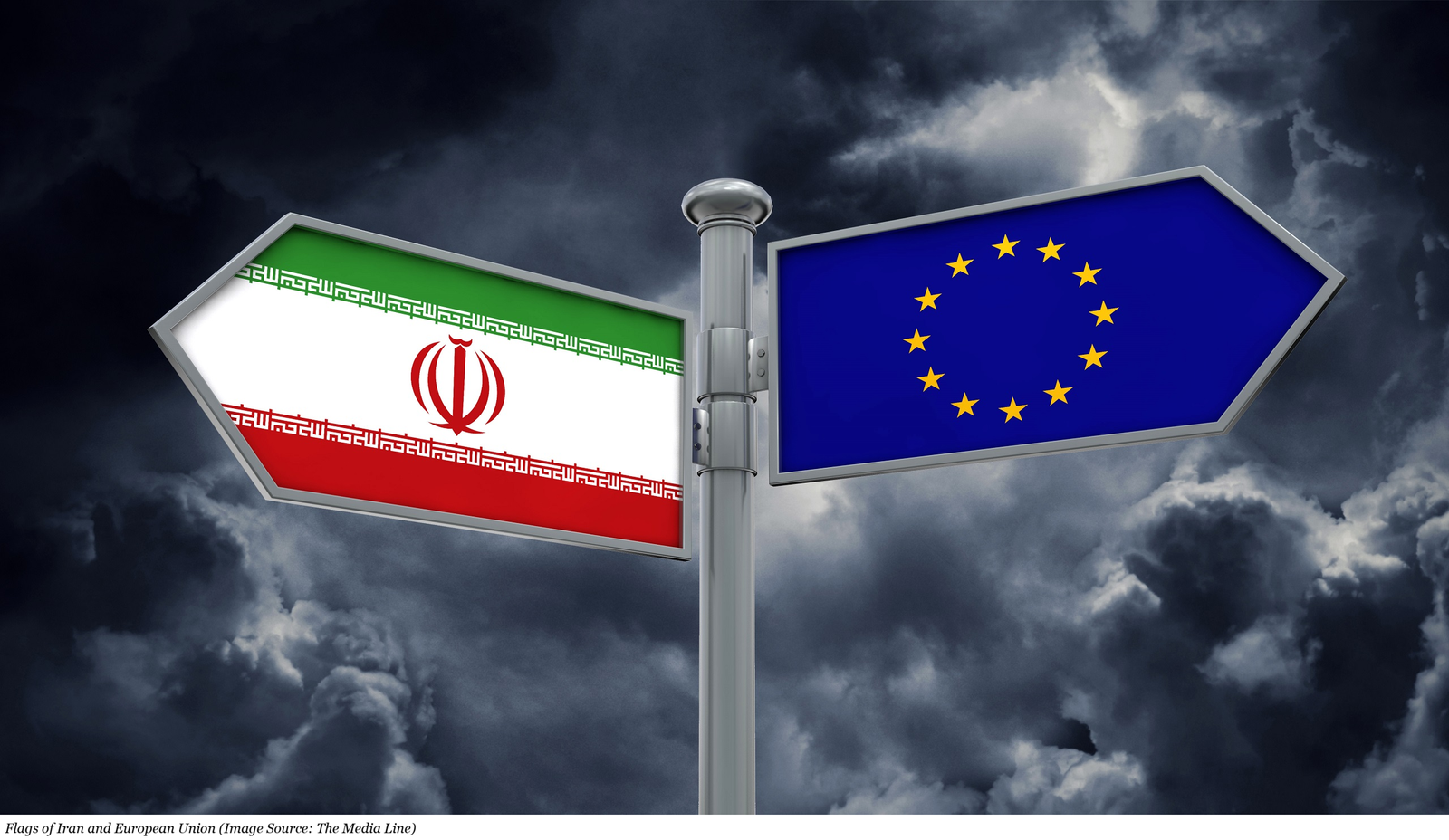
In part of the European debate concerning Iran, there is something extremely disturbing. How to understand that some analysts, intellectuals, politicians, in the name of democracy or international law, oppose the offensive led by the United States and Israel, while the power of the mullahs is among the most repressive in the region? How to explain this caution, mixed with a certain indulgence? With regard to a regime that oppresses its population, intensifies executions, and has inscribed its strategy of regional confrontation for decades? Recent UN observations on the scale of violations in Iran leave no room for uncertainty about the nature of the regime.
To understand this European stance, we must first avoid caricature. A part of this intelligentsia does not 'support' the mullahs. It reasons from another trauma: that of past Western interventions. Iraq, Libya and Afghanistan have left a mark on European consciousness. Many have integrated the idea that bringing down a regime does not mean creating a more just order. In their reading, war destroys more easily than it reconstructs. Their first reflex is therefore less to defend Tehran than to fear chaos, state collapse, civil war, regional fragmentation, and a new sequence of destabilization in the Middle East. Even recent reports indicate that the Iranian state apparatus is not automatically on the verge of extinction, which fuels the argument that military force alone does not offer a clear political solution.
One can also note a more specifically European aspect: the emphasis placed on the supreme importance of 'right', de-escalation and diplomacy. In its recent reactions, the European Union has stressed the importance of moderation, regional stability and avoiding escalation, while reaffirming its support for the democratic aspirations of the Iranian people and also denouncing Iran’s offensives against the Gulf States. Consequently, the official European position is not to support the regime; it is to reject military intensification as a preferred means. But this caution has its downside: it can lead to a moral imbalance. By focusing on the risks of intervention, some speeches overshadow the very nature of the Iranian regime. We then talk more about the faults of Washington or Jerusalem than about the structural violence of a theocratic power that terrorizes its own society. The risk is there: transform a legitimate anti-interventionism into a political blind spot. Because to fear too much the brutal fall of a regime, one sometimes ends up trivializing its permanence.
Moreover, there exists in certain intellectual circles a more ideological springboard: a principled anti-Americanism, sometimes coupled with a reading of the world where the West would be the first to blame, even when it confronts an openly authoritarian regime. In this reading grid, the American or Israeli action almost automatically becomes the main problem, and the Iranian regime takes a back seat. This reflex is not universal, but it exists. It partly explains why certain analyses seem less concerned with the dictatorship of the mullahs than with the denunciation of the democracies that fight against it.
That’s where you have to hold a ridge line. One can refuse war overtures, warn against the illusions of the imposed 'change regime', recall the requirements of international law, but nevertheless clearly name the Iranian reality. The problem is not to discuss the means; the problem is to erase the object of the debate.
Iran is not an ordinary power unjustly attacked: it is a repressive, ideological and destabilizing regime whose first victims are the Iranians themselves. Good articulation is therefore neither excess nor complacency. Because strategic lucidity always begins with a moral requirement: do not confuse caution in the face of war and blindness in the face of dictatorship.
(Gilles Touboul is a geopolitical analyst and former international currency trader with expertise in Middle East and Asia)