


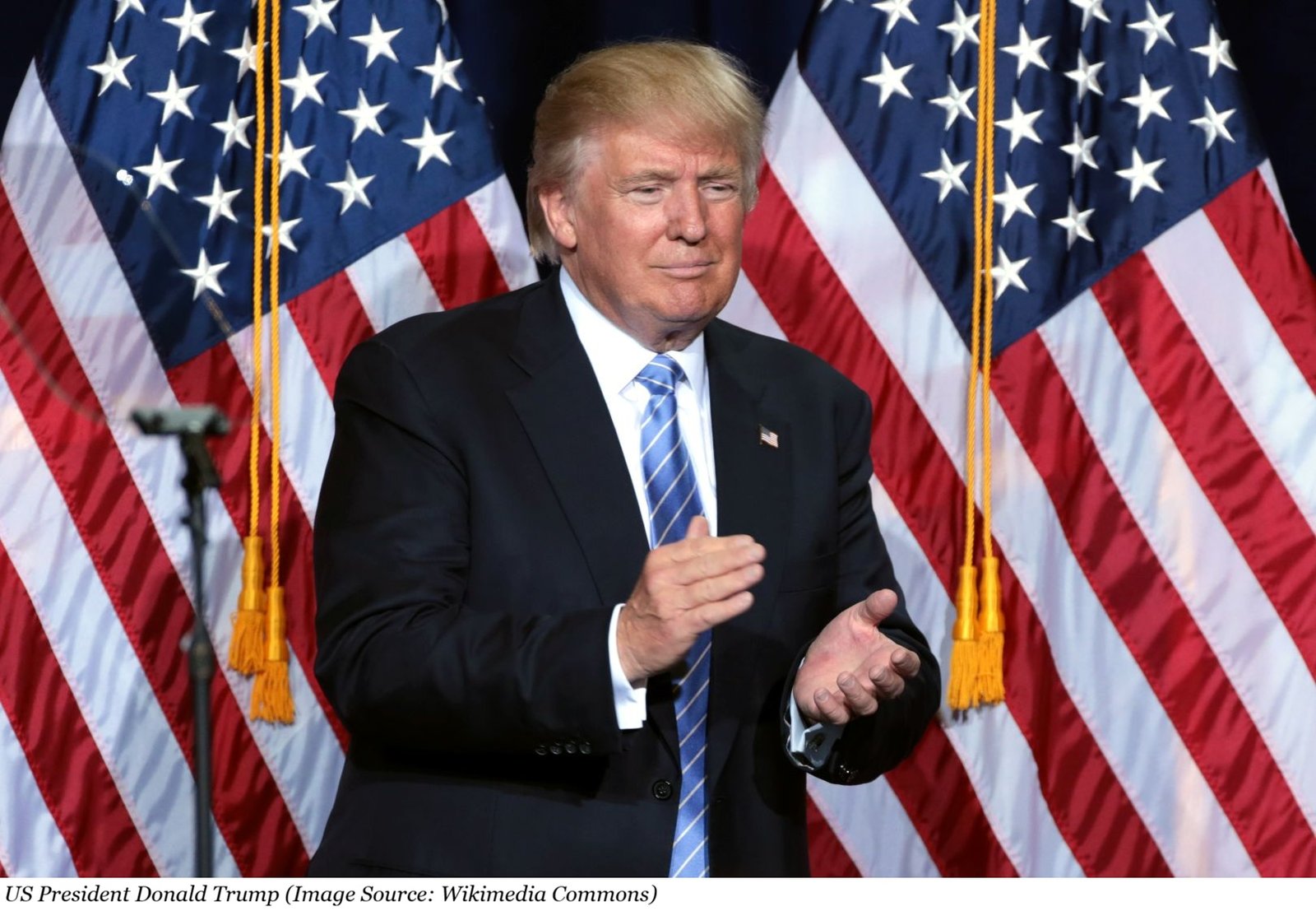
Since his return to the White House, Donald Trump has made the threat a first-rate diplomatic instrument. Far from the improvisation attributed to it by its critics, this diplomacy of "delay" is based on a coherent doctrine, articulated around three levers: public ultimatum, narrative domination, and economic coercion. The Iranian-American crisis of 2025-2026 constitutes its most revealing laboratory since the Cold War.
A Break with Method, Not Just Tone
Classical diplomacy moves quietly: verbal notes, discreet channels. Trump does the opposite. He publicizes the threat, assigns it a timetable, and forces the opponent to react in the public space—which already constitutes a strategic victory before any concrete movement. The 48-hour deadlines granted to Tehran before considering strikes on its electrical installations are not forum formulas: they are presidential ultimatums built to occupy the world agenda.
The true Trumpian rupture is the disintermediation of diplomatic speech. No more spokespersons, no more coded language, no more negotiation by omission. The threat is said to be nominal, dated. This coercive clarity is unprecedented: a threat made public is infinitely more complicated to remove without losing face.
The Mechanics of the Ultimatum
Three elements structure this mechanism. The first is the asymmetric threat: potential strikes against Iran are not presented as a last resort, but as a natural horizon in the absence of concessions.
The second element is the calibrated delay: forty-eight to seventy-two hours. he says that the decision is already taken in its broad outlines, and that only the opponent can still influence the course.
The third element is extreme personalization: Trump does not commit an institution; he commits his man’s word. In cultures of honor — and the Islamic Republic is one—giving in to a man who has put his personal name in the balance is infinitely more humiliating than negotiating with an administration. This psychological asymmetry is a pressure multiplier.
In theory, an unpredictable actor should be less credible in their threats. Trump has reversed this premise. Its supposed instability has become a deliberate strategic asset: when the adversary cannot distinguish between rhetoric and intention, he must overestimate the risk, which amplifies the pressure without Washington having to act.
Nixon had theorized this posture under the name of «Madman Theory»: to make the opponent believe that the president is capable of extreme actions. Trump embodies it with an authenticity that makes the calculation of Tehran, Moscow or Beijing infinitely more complex. Authentic uncertainty is more coercive than displayed certainty.
Narrative Domination: Winning the Media Cycle Before Hitting
The military component is only the second curtain. The first one is narrative. Every presidential statement on Iran is built to occupy the global media space before Tehran can formulate a coherent response. The Islamic Republic thus finds itself structurally in a reactive position — obliged to comment and deny instead of initiating. This asymmetry of the agenda is a permanent diplomatic triumph, which European observers have systematically underestimated.
At the same time, economic sanction functions as a lever of continuous coercion. Tehran can no longer plan its economy without integrating the Trump variable. The objective is not to destroy the Iranian economy, but to prevent it from stabilizing: a form of economic war through decisional exhaustion.
This doctrine has three significant weaknesses. The first is the credibility trap: each time granted without consequence marginally erodes the strength of the next one. Trump has so far managed this risk through a combination of limited strikes and rhetorical escalations, but the margin is narrowing.
The second is Allied isolation: the European partners, and some Gulf countries, refuse to be instrumentalized in a strategy whose consequences they do not control. The lack of a strong coalition diminishes the perceived legitimacy of coercion and increases its political costs.
The third is the most paradoxical: external pressure tends to consolidate the Iranian elites of the hard line that it precisely aimed to weaken. The American threat is transformed into a resource of national legitimacy—coercion, poorly calibrated, can produce the exact opposite of the desired effect.
It would be convenient to conclude that Trump is improvising. This reading is reassuring but false. What is unfolding is the emergence of a coherent doctrine of personalized coercion, based on an understanding of the psychological springs of international pressure.
The dated ultimatum, the dominant narrative, the reversible sanction, the cultivated unpredictability: these four elements form a system. maybe that’s what we should remember: Trump is not only waging a war of strikes or sanctions. He is waging a war of rhythm. He wants to decide the tempo, impose the countdown, prevent the enemy from breathing politically. Its strength is there: transforming time into a power multiplier. But perhaps its limit is also there. Because when a president makes the clock a strategic instrument, he sometimes wins the initiative; he can also lock everyone into an acceleration from which no one knows how to escape. Today, the real question is therefore not only whether Trump will go to the end of his threat. The real question is whether this diplomacy of delay can produce anything other than momentary submission—or further escalation.
(Gilles Touboul is a geopolitical analyst and former international currency trader with expertise in Middle East and Asia)