


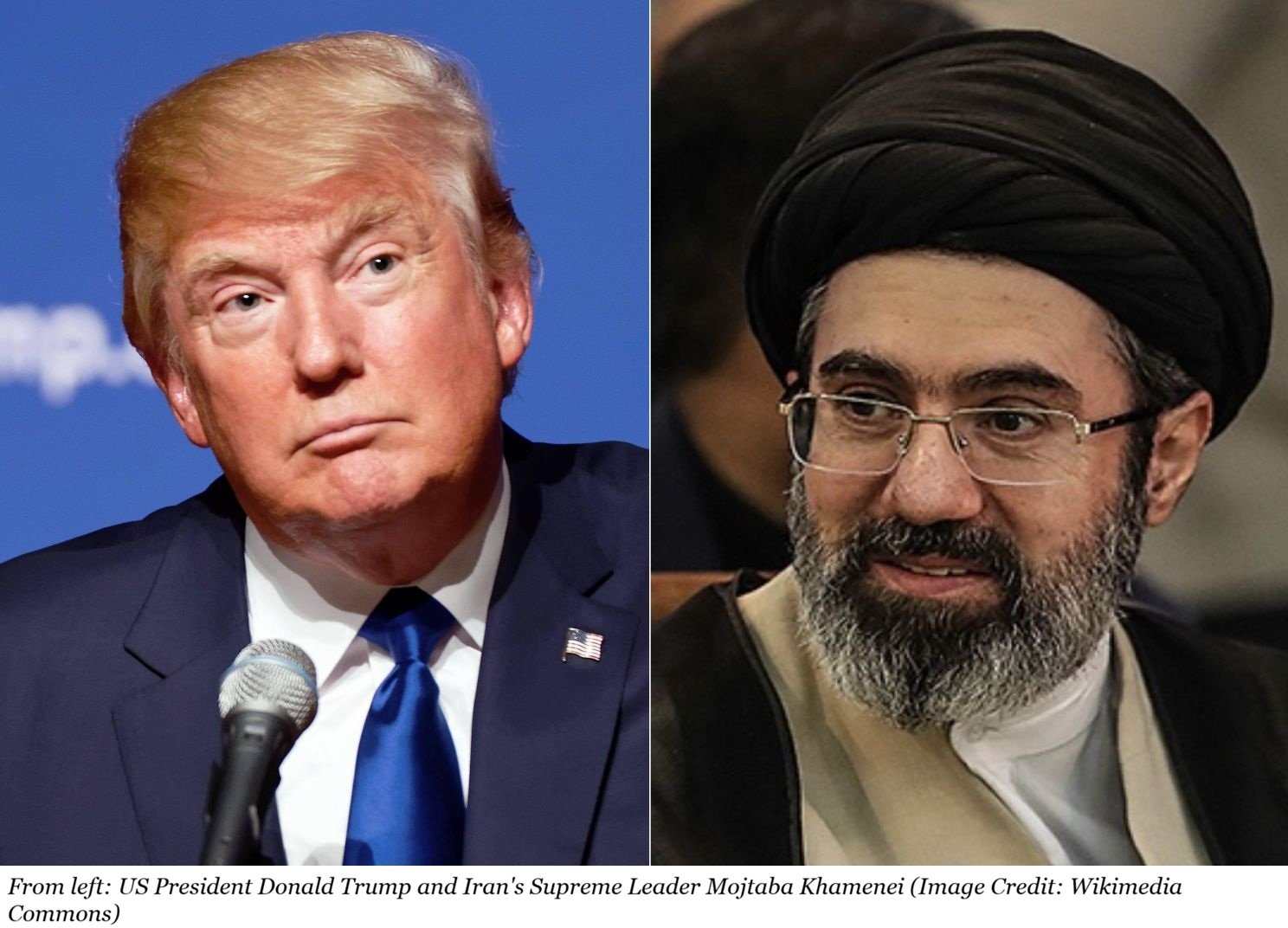
The two-week ceasefire between the United States and Iran, announced on April 7, is already being sold in radically different ways. Donald Trump is presenting it as proof that pressure worked. Tehran is presenting it as proof that it resisted, survived, and entered negotiations without surrender. Both narratives are politically useful. Neither is entirely false. But neither captures the deeper geopolitical reality. What we are seeing is not pure coercion, and it is certainly not simple capitulation. It is something more ambiguous, and therefore more important: a fragile pause produced by military pressure, strategic exhaustion, and mutual narrative management.
The first mistake would be to read this ceasefire as a peace agreement. It is not. Reuters reports that the truce was brokered through Pakistani mediation after Washington received a 10-point Iranian proposal that Trump called a “workable basis” for further talks. The pause was tied to the reopening of the Strait of Hormuz, the real strategic hinge of the crisis. In other words, this was not reconciliation. It was an emergency mechanism to stop escalation from producing even greater regional and global costs.
That distinction matters. A peace settlement resolves a conflict’s political logic. A truce merely interrupts its military tempo. This one looks much closer to the second category. The terms remain contested, implementation is unclear, and even as the ceasefire was announced, reporting showed serious disagreement over what exactly had been accepted by whom. AP noted that attacks continued and that the ceasefire’s scope remained disputed, especially regarding Lebanon, where Israel insists it retains freedom of action against Hezbollah.
So, was Trump using coercion? Obviously yes. The ceasefire came after weeks of war, explicit American threats, and the credible prospect of larger strikes if Iran did not move. Trump’s method has not changed: escalate rhetorically, create a deadline, raise the cost of refusal, then offer a narrow exit that can be presented as a diplomatic breakthrough. This is coercive diplomacy in its most personal, theatrical form. Reuters reported that Trump framed the pause as possible because U.S. war aims had largely been achieved. He later even described the outcome as a “total and complete victory.”
But coercion is not the same thing as domination. That is where many analysts go wrong. A state can be pressured without being politically broken. Iran does not seem to be open to unconditional submission. According to Reuters, Tehran is still extremely suspicious and is approaching negotiations cautiously in order to keep leverage around Hormuz and get assurances against further assaults. The Iranian 10-point proposal and the U.S. 15-point framework do not share the same end state, ideology, or document. Washington wants rollback. Tehran wants survival with limits. That is not capitulation. It is bargaining under duress.
This is why the word “capitulation” is analytically lazy. Capitulation would mean the regime had accepted the victor’s terms in a way that stripped it of political agency. That is not what the available reporting suggests. Iran is still trying to shape the diplomatic battlefield, still trying to preserve some enrichment rights, and still trying to define the legal and military conditions of maritime passage through Hormuz. Even weakened actors can negotiate. In fact, they often negotiate hardest when they have been damaged but not destroyed.
This agreement's true political value is found elsewhere: both parties require a pause, but for opposite reasons. Trump must demonstrate that using force achieved results without engaging the US in a never-ending conflict. His political identity depends on him coming across as both more powerful than his forebears and less constrained than they were. He wants to look like the man who can threaten annihilation one day and extract a deal the next. AP’s reporting on his shift from maximalist threats to a 14-day truce fits that pattern exactly.
Iran, for its part, needs a different story. It must show its internal audience, its regional networks, and the wider anti-Western space that it did not bend instantly under American fire. Survival itself becomes political capital. A regime under attack can sometimes convert endurance into legitimacy, especially if it enters talks while insisting that it still has cards to play. Tehran’s caution, its insistence on guarantees, and its effort to preserve bargaining space are all signs of a regime trying to avoid the optics of humiliation.
There is also a third actor in this story that should not be overlooked: the market. Oil fell sharply after the ceasefire announcement, with Reuters reporting Brent below $100 and a broad relief rally in global equities. That tells us something essential. The central strategic question was not only military prestige; it was the security of energy flows through Hormuz. The market understood before many commentators did that this war’s most dangerous consequence was systemic, not symbolic. A deal that lowers that risk, even temporarily, immediately changes the international atmosphere.
Europe’s reaction is also telling. The EU welcomed the ceasefire and urged work toward a lasting agreement. That is the language of actors relieved by de-escalation but not central to the negotiation itself. Europe is once again in the familiar position of applauding diplomacy whose terms it did not shape. That is not trivial. It confirms that in crises around Iran, the decisive triangle remains Washington, Tehran, and the military balance around the Gulf, with secondary players trying to stabilize the margins.
My conclusion is straightforward. This is neither a clean American triumph nor an Iranian capitulation. It is a coercive pause in which both sides are trying to transform battlefield stress into diplomatic advantage. Trump can claim pressure worked. Iran can claim it never surrendered. Both claims may coexist for a while. But the true test lies ahead: enrichment, missiles, proxies, guarantees, and the status of Hormuz. Until those questions are settled, this deal is not a strategic turning point. It is an armistice of uncertainty. And in geopolitics, uncertainty is often just another name for the next phase of the conflict.
(Gilles Touboul is a geopolitical analyst and former international currency trader with expertise in Middle East and Asia)