


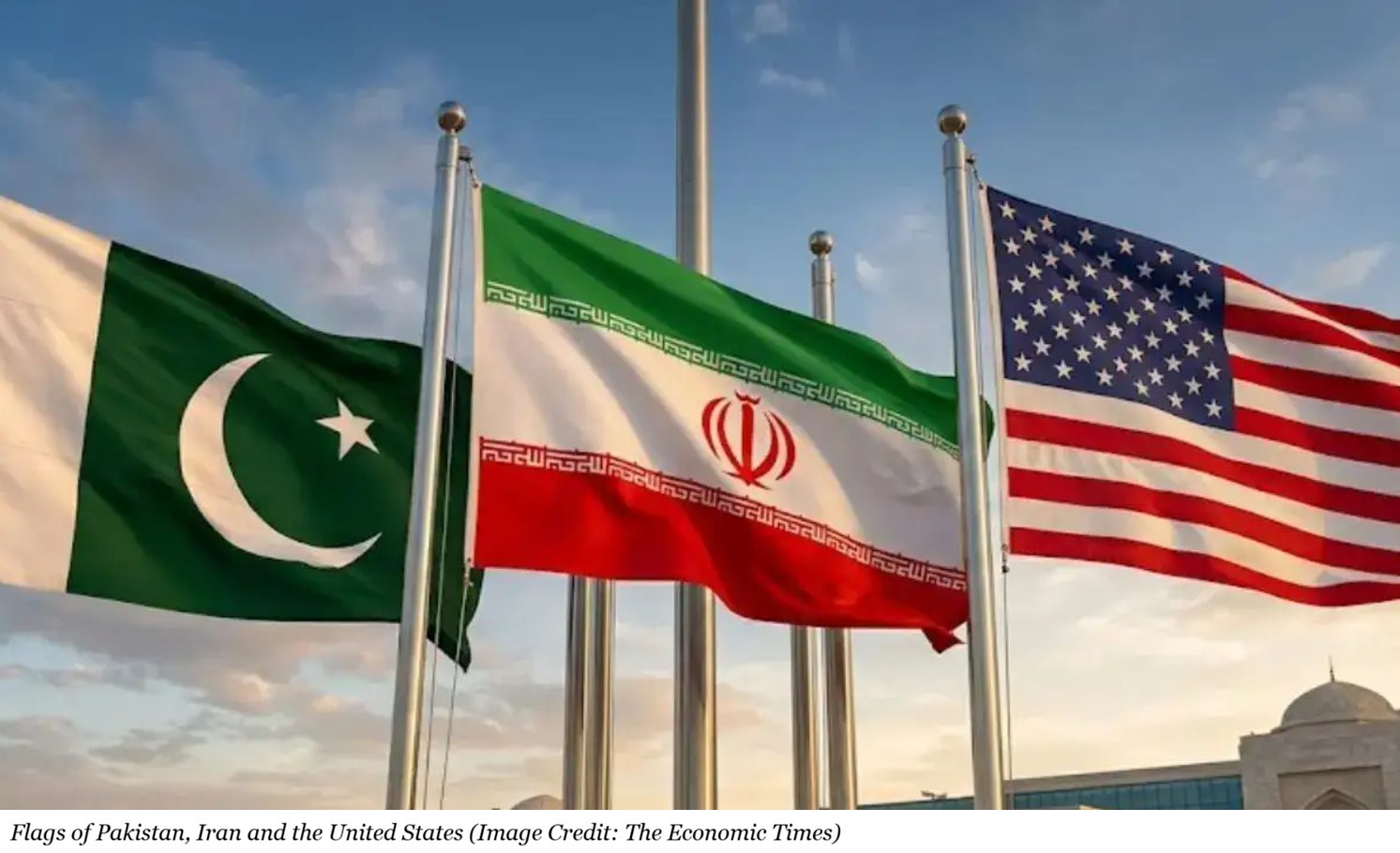
We must be wary of a word that comes up too quickly in this type of crisis: objectivity. In geopolitics, perfectly neutral mediators rarely exist. What exists, however, are actors who are deemed sufficiently acceptable for both adversaries to continue talking to each other without completely losing face. This is exactly the place that Pakistan is trying to occupy between the United States and Iran. The high-level talks held in Islamabad on April 11–13 were the largest between Washington and Tehran in decades. They didn’t produce an agreement, but they didn’t close the door either. Since then, discussions seem to be moving not toward a grand historical compromise, but toward a more limited interim arrangement, aimed above all at preventing an immediate resumption of escalation.
Pakistan is not there to solve the crisis in the noble sense of the word. He is there to prevent the collapse of the canal. And it is very different. In a Schellingian reading, Islamabad does not embody external justice; it becomes an instrument of minimal stabilization. It offers a place, discretion, and transmission capacity. In other words, it reduces the risk of sudden breakup, which, in such a symbolically and militarily charged confrontation, is already worth a lot.
An Interested Mediator, Not a Neutral Arbitrator
But it would be naive to go further and talk about impartiality. Pakistan is not above the game; rather, it is deeply immersed in its constraints. It shares a border with Iran, must monitor its own internal balances, maintains a close partnership with Saudi Arabia, and has invested heavily in the past year in its diplomatic escalation to Washington. His calculation is therefore clear: to avoid a regional conflagration directly affecting him while transforming this diplomatic utility into a strategic dividend. It is the opposite of abstract neutrality. It is a policy of survival but also of repositioning. Reuters points out that this mediation is highly risky for Islamabad: if it fails, Pakistan can appear as an actor that has overestimated its ability to influence; if it holds, even partially, it becomes a central player in a crisis that goes far beyond South Asia.
China in the Background
The position of China is decisive here. Islamabad cannot play a leading role in this issue without Beijing tolerating and even encouraging it. On 31 March, China and Pakistan jointly called for quick talks and the restoration of normal navigation at Hormuz. Then, on April 13, China again stressed the fragility of the ceasefire and encouraged Pakistan to play a more active role in resolving the conflict. Pakistan does not mediate against Chinese preferences; it acts within a diplomatic space that Beijing deems useful to its interests.
China does not necessarily have an interest in exposing itself directly as the architect of a mediation whose outcome remains uncertain. On the other hand, it has an interest in having a partner as dependent and close as Islamabad to keep the channel open. Pakistan then becomes a form of indirect diplomatic extension of Chinese prudence: active enough to influence, not central enough to engage frontally with Beijing in case of failure. For Washington, this is acceptable, because Islamabad also remains useful once again to the United States. It is this ambiguity that makes its strength.
What About India?
The first would be to say that the outcome does not change anything for India. That would be wrong. The second option would be to conclude that India’s downgrade vis-à-vis Pakistan. That would be excessive. India remains a major strategic partner for the US, including through trade, technology, and supply-chain reconfiguration. The interim trade framework announced in February shows that Washington continues to bet on New Delhi for the long term. Therefore structurally, Pakistan does not replace India in the US hierarchy.
But in this specific crisis, India suffers from a deficit of diplomatic centrality (an important ally is not always a good intermediary). To serve as a channel, you need proximity with the adversary, useful geography, military relays, discreet connections, and some strategic ambiguity. Pakistan has these attributes in the Iranian file. India, much less. It is concerned with the consequences—first and foremost by energy and maritime safety—without being the political crossroads of the negotiation. The April 18 attack on two Indian-flagged ships at Hormuz was a clear signal that New Delhi is paying part of the strategic cost of the crisis, but Islamabad is reaping some diplomatic visibility.
Basically, what this sequence reveals is, in a neighbourhood crisis, geography and useful ambiguity can weigh more than long-term strategic alignment. Pakistan is not a model mediator; it is an interested stabilizer. He does not speak in the name of a higher order but in the name of his well-understood interests: to avoid conflagration, to become indispensable again, and to exist at the same time for Washington, Tehran, and Beijing. That is precisely why he counts today. Not because he would be neutral, but because he is one of the few actors in the region still able to speak to everyone without being totally aligned with anyone.
(Gilles Touboul is a geopolitical analyst and former international currency trader with expertise in Middle East and Asia)