


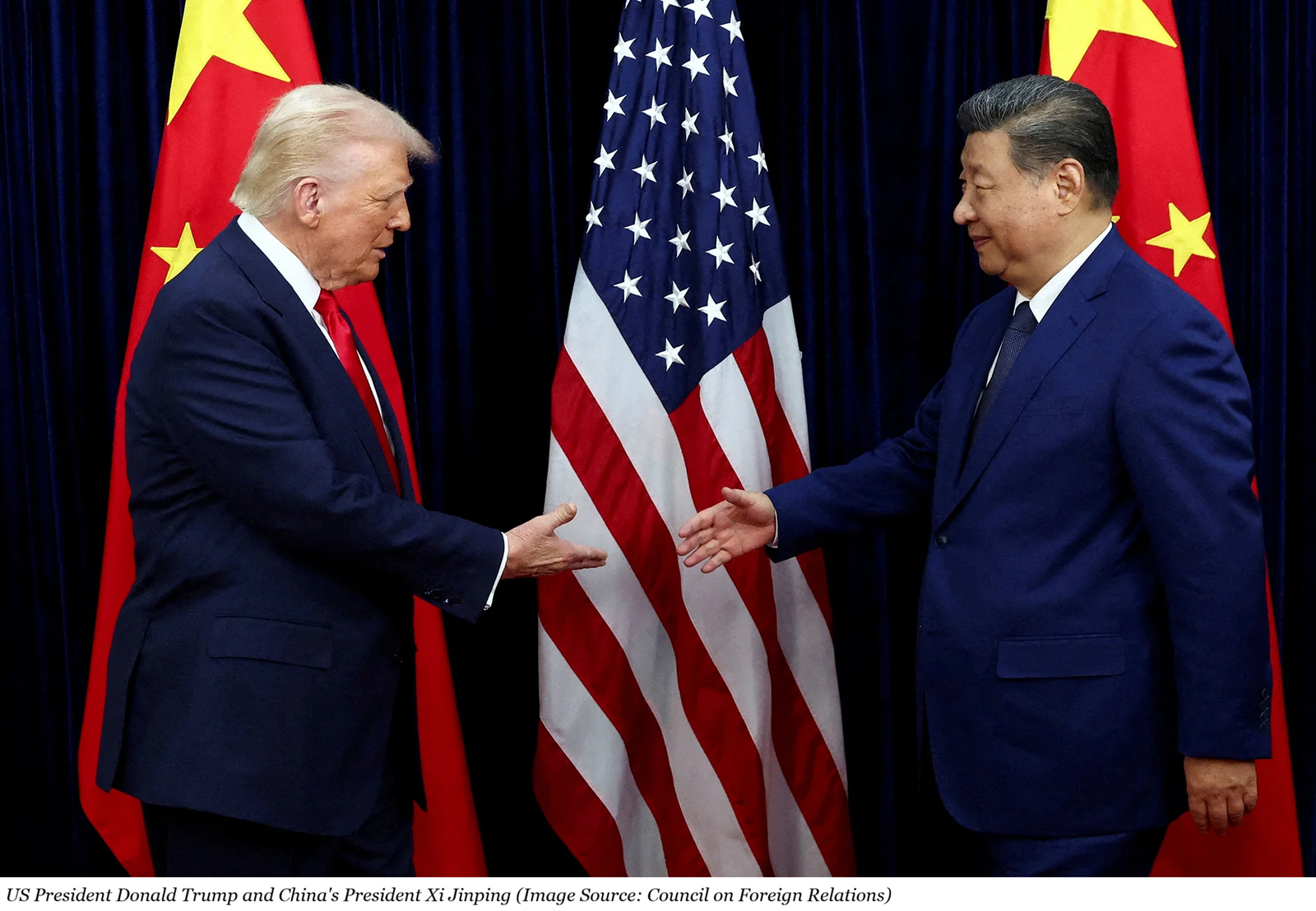
Taiwan is probably the real test of this meeting between the United States' President Donald Trump and China's President Xi Jinping. Taiwan is the structural file, the one that can define the Sino-American relationship for years to come.
According to various press releases, Xi Jinping clearly placed Taiwan at the center of the confrontation.
On the US side, the public message seems much more cautious: the White House has mainly highlighted Iran, Hormuz, trade, access to the Chinese market, while Taiwan has been less publicly exposed.
The first option: Beijing wants to turn Taiwan into a price for Sino-American stability
The Chinese message is simple: if Washington wants a stable relationship with Beijing, it must reduce its political and military support for Taiwan. Beijing is not just asking for a diplomatic phrase. He is testing how far D. Trump could go in a transactional logic: tariffs versus concessions, Iran versus Chinese restraint, economic stability versus American moderation on Taiwan.
The novelty is not the Chinese position. The novelty is context: D. Trump arrives in Beijing with several open files—Iran, Timetable, tariffs, energy, markets but Taiwan could become not a standalone issue, but a variable in a global negotiation between great powers.
The second option: Trump remains silent to retain leverage
Trump’s public silence on Taiwan can be read in two ways.
First reading: he does not want to provoke Beijing while Iran, Hormuz and the markets demand a minimum of Chinese cooperation. Second reading: it keeps Taiwan as a negotiating card. In the Trump method, vagueness can be voluntary: to say nothing is sometimes to let everyone believe that they can still get something.
But this silence could worry Taipei (an impression of gradual abandonment by more ambiguous diplomatic language), or by a "big deal" between China and the US concluded above his head.
The third option: China may prefer grey pressure to open war
Beijing can increase military, naval, cyber, economic, and psychological pressure on Taiwan without crossing the threshold of war immediately. This is the most likely Chinese strategy: testing US strength, testing Taiwanese nervousness, testing Japanese reaction, and measuring whether Trump really wants to defend Taiwan or risk jeopardizing his trade negotiations with Beijing.
The fourth option: Taiwan could further internationalize its security, and seek to avoid "isolation" strengthening its ties with the US Congress, bringing its security even closer to Japan, South Korea and the Philippines, and recalling its central role in semiconductors).
If Washington gives the impression that Taiwan is negotiable, then Japan, South Korea, the Philippines, Australia, and even India will question whether the US guarantee is still reliable.
Beijing used the meeting to send a strategic warning: Sino-US stability has a price, and that price is called Taiwan. Washington, for its part, seems to want to retain the maximum flexibility: not fully reassuring Taipei, not fully satisfying Beijing, and keeping Taiwan as an element of pressure in a much broader negotiation.
Taiwan’s response will therefore probably be that of a state that understands the danger: public calm, diplomatic firmness, defensive acceleration, mobilization of the US Congress, and internationalization of the issue.
Beijing wants to make Taiwan a red line; Trump might be tempted to turn it into a map; and Taipei must prevent it from becoming a bargaining chip.
(Gilles Touboul is a geopolitical analyst and former international currency trader with expertise in Middle East and Asia)