


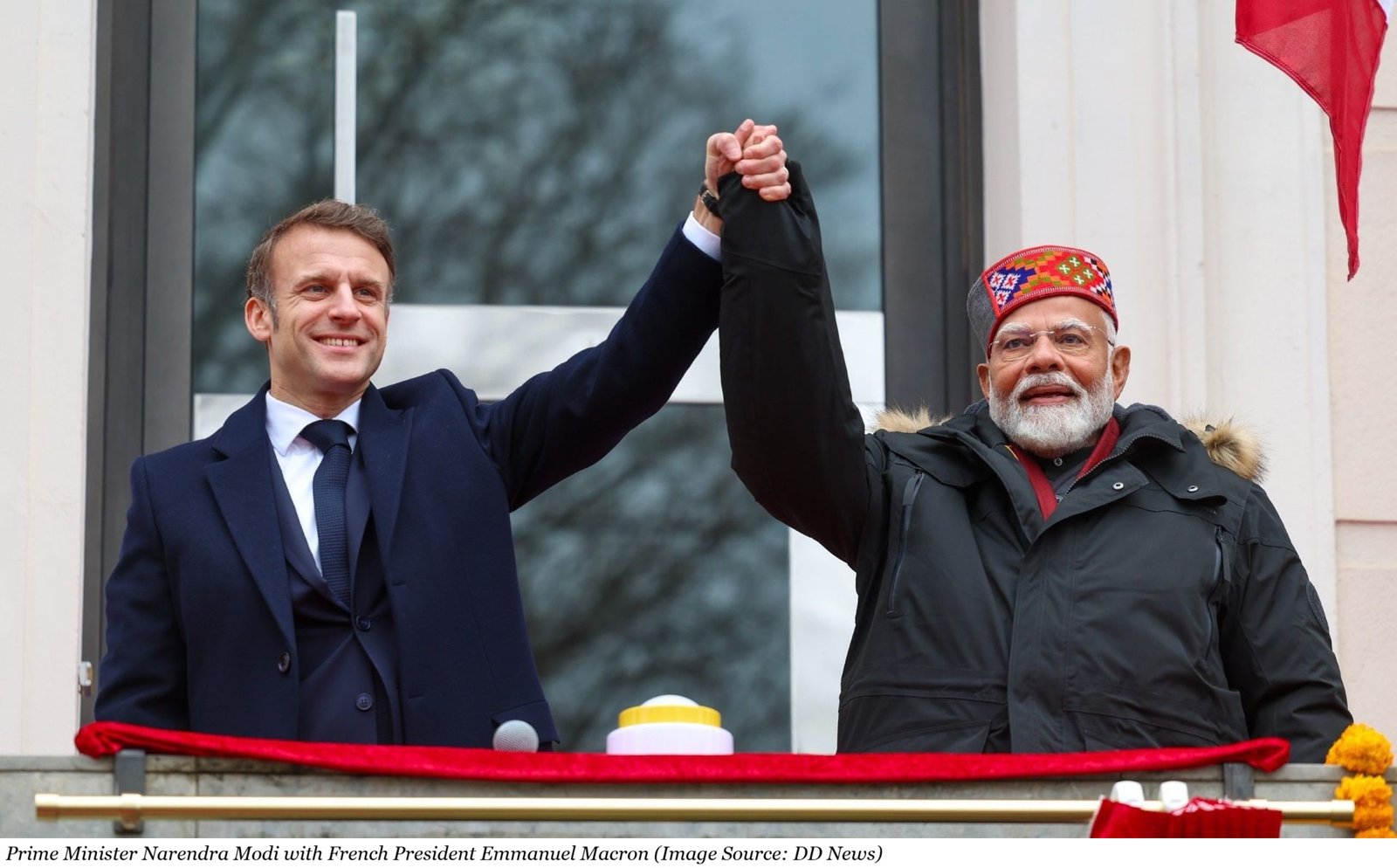
India’s plan to buy 114 French Rafale jets is not just another arms deal. It marks a move toward more strategic independence.
New Delhi has not yet finalized the purchase of the 114 Rafales. India has sent France a Letter of Request to start talks for a contract worth about 3.25 lakh crore rupees. Some jets are expected to come from France, but most will be made in India as part of the “Make in India” program.
This deal is important for more than just technical reasons. After earlier purchases of 36 Rafales for the Air Force and 26 Rafale Marine jets for the Navy, France is now a major partner in modernizing India’s military.
This raises a crucial query: Is India turning away from the US?
The solution is not straightforward. India continues to rely on the United States for assistance in the Indo-Pacific, intelligence, technology, cybersecurity, supply chains, and naval cooperation; it is not severing its links with Washington. Although New Delhi seeks to avoid becoming overly dependent on any one nation, the US remains a significant ally.
India gains from France's solid operational support without requiring total political alignment. France respects India's independence while cooperating, sharing technology, and selling equipment. This aligns with Delhi's commitment to strategic autonomy and desire to avoid political meddling. The foundation of their 1998 alliance is the idea of collaboration without dominance. Beyond business concerns, this relationship is based on respect for each other's sovereignty.
The chance that the US and Pakistan might work more closely again is also important. If Washington builds stronger ties with Islamabad, especially with Pakistan’s regional ambitions, India will pay attention. In the past, any warming of US-Pakistan relations has made New Delhi worry about losing its place as America’s main partner in Asia.
Buying the Rafales would serve several goals. It is not just about countering China or meeting Air Force needs. It also sends a message to Washington that India values the partnership but does not want to be dependent or closely supervised.
This is not an anti-American step. It is a strategic change.
New Delhi understands that American power has limits. US priorities can change after elections, and the US might work with Pakistan or use political or technological pressure. India sees itself as a civilizational power, not just a regional ally, and wants to avoid these kinds of dependencies.
In this situation, France gives India more options. It helps India diversify suppliers, depend less on Russia and the US, and build up its own industry. This choice is both military and diplomatic.
India continues to receive substantial quantities of munitions from Russia. However, the situation is further complicated by the conflict in Ukraine, sanctions, production delays, and Moscow's closer relationship with Beijing. India does not intend to immediately end its dependence on Russia; however, it recognizes the need to expand its security alliances. India's management of its international relationships is illustrated by the Rafale agreement. Rather than taking a stance, India aims to maintain a balance in its relationships by purchasing from France, collaborating with the United States, maintaining connections with Russia, engaging the Global South, containing China, and monitoring Pakistan. This is the fundamental principle of Indian diplomacy today. today.
India’s strategy of aligning with many countries has become a way to survive in global politics. But as India becomes more influential, others expect it to take clearer sides. Washington wants India to stand up to China, Moscow wants less Western alignment, the Global South wants freedom from Western influence, and China sees India’s military growth as a threat.
In this context, the possible purchase of 114 Rafales underscores India’s goal of remaining independent in a world of more rigid alliances. It gives New Delhi more flexibility, advanced technology, and a partnership with fewer limits. For Paris, it is a win on both the industrial and diplomatic fronts. For New Delhi, it is a form of strategic insurance.
In summary, India is not moving away from the United States, but wants to depend on it less.
This difference matters.
India is not picking Paris over Washington. Instead, it works with France to strengthen its position with the US, build more alliances, and protect its independence.
India seeks to maintain connections with all major powers while not entirely aligning with any one group as the world becomes increasingly fragmented.
(Gilles Touboul is a geopolitical analyst and former international currency trader with expertise in Middle East and Asia)