


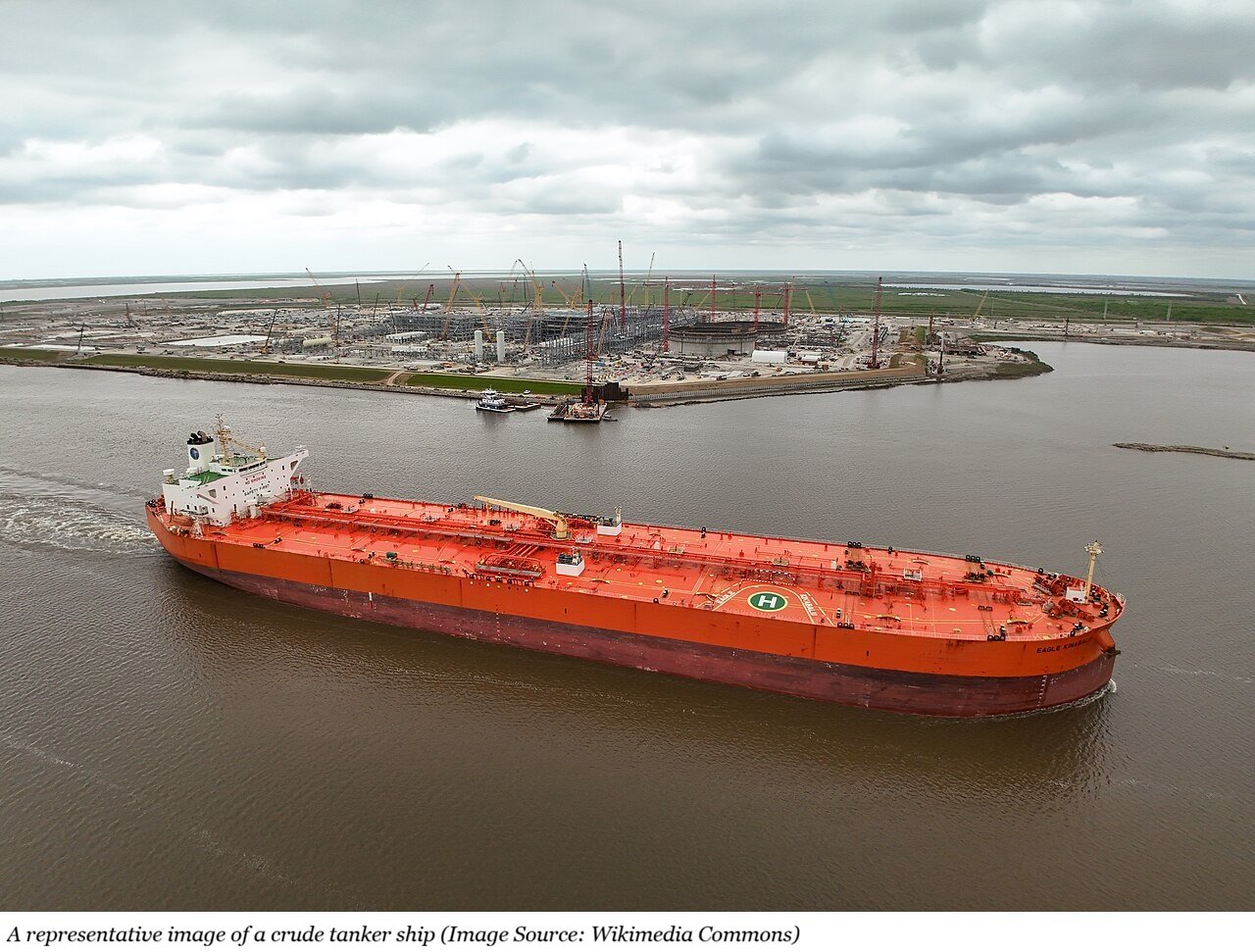
There are moments when markets say out loud what diplomacy prefers to say in half-measures. The recent drop in oil prices is one such moment. It does not mean that the Middle East has entered a period of peace. Nor does it mean that the Iranian risk has disappeared. But it does indicate something more subtle: for now, markets no longer believe in the scenario of a major and lasting disruption to energy supplies.
This is when oil becomes a political indicator.
In early July, Brent crude was trading around $72 and WTI around $69, at levels considered the lowest since the start of the American-Israeli conflict with Iran. This decline can be explained in particular by the partial resumption of traffic in the Strait of Hormuz, by improved oil flows, and by the belief that diplomatic efforts between Washington and Tehran are still holding.
On the surface, the institutional consensus might see this as simply good news: de-escalation is working, markets are calming down, and diplomacy is regaining the upper hand. But this reading is too simplistic. It overlooks something essential: when oil prices fall, it does not necessarily mean a political victory. Above all, it signals that the major players have succeeded, at least temporarily, in protecting what matters most to the global system: flows, shipping routes, cargoes, and prices.
In other words, oil does not say: "Iran is defeated." It says instead: "Iran has once again become compatible with an arrangement."
This is a significant nuance.
For if the Strait of Hormuz is gradually reopening, if tankers are circulating again, if Gulf producers are increasing or speeding up their deliveries, then the message is not just economic. It is political. The center of gravity of the crisis has shifted. We are no longer just in a logic of military confrontation, but in a logic of negotiating flows.
The question is no longer simply: Who hit whom? The real question becomes: who agrees to let what through, at what price, and in exchange for what guarantees?
This is why the drop in oil prices partly validates the political reading rather than the institutional consensus. The official discourse insists on stabilization. The market, however, shows that stabilization is perhaps first and foremost a transaction. Washington wants to avoid a global energy crisis. The Gulf monarchies want to sell. Asia wants to be supplied. Europe wants to avoid another inflationary shock. And Iran knows that oil, even when it is not launching missiles, remains a tool of pressure.
The paradox is this: the fall in oil prices may appear to be a sign of appeasement, but it may also reveal that Tehran has not been marginalized. If Iran were truly out of the game, the problem would be solved by force. But that is not what prices are saying. Rather, they indicate that Iran remains a player who must be considered in the calculation: contained, sometimes bought off, often bypassed, but rarely ignored.
This is also why we must be wary of overly triumphant interpretations. A drop in oil prices is not proof of peace. It is often proof of risk management. Markets do not judge the morality of an agreement. They assess its ability to maintain flows. They do not ask whether Iran comes out symbolically strengthened or weakened. They ask whether the barrel will circulate, whether Hormuz will remain open, whether Asian refineries will be supplied, whether OPEC+ will increase supply, and whether stocks will suffice.
Moreover, the prospect of another OPEC+ production increase in August also exerts downward pressure on prices. This shows that the movement is not only due to geopolitics, but also to supply. But even this fact remains political: in an international crisis, producing more, reassuring customers, and smoothing maritime routes is never neutral. It is a way of saying that the system wants to absorb the shock rather than worsen it.
Oil thus confirms a hypothesis: behind the official statements, the priority may not have been to bring down Iran, nor even to force it all the way. The priority may have been to prevent the Iranian crisis from becoming a global energy crisis.
It is less spectacular than a military victory. It is less noble than a great diplomatic peace. But it is probably closer to reality.
The world today no longer operates solely through treaties, alliances, and declarations. It relies on sea passages, cargoes, risk premiums, insurance rates, strategic stocks, and market expectations. Oil thus becomes a form of geopolitical language. When it rises sharply, it says "fear." When it falls after a crisis, it does not necessarily reflect confidence. Sometimes it says: "An arrangement has been found to avoid the worst."
The fall in oil prices therefore does not close the Iranian file. It reveals it. It shows that power is measured not only by the ability to strike, but also by the ability to hold a strait, to unsettle markets, to negotiate its return to the flows, and to force others to rely on it.
That may be the true message of the barrel: the Middle East is not pacified. It is administered. And in this administration of disorder, oil remains one of the best instruments for understanding what diplomacy does not always say.
(Gilles Touboul is a geopolitical analyst and former international currency trader with expertise in Middle East and Asia)