


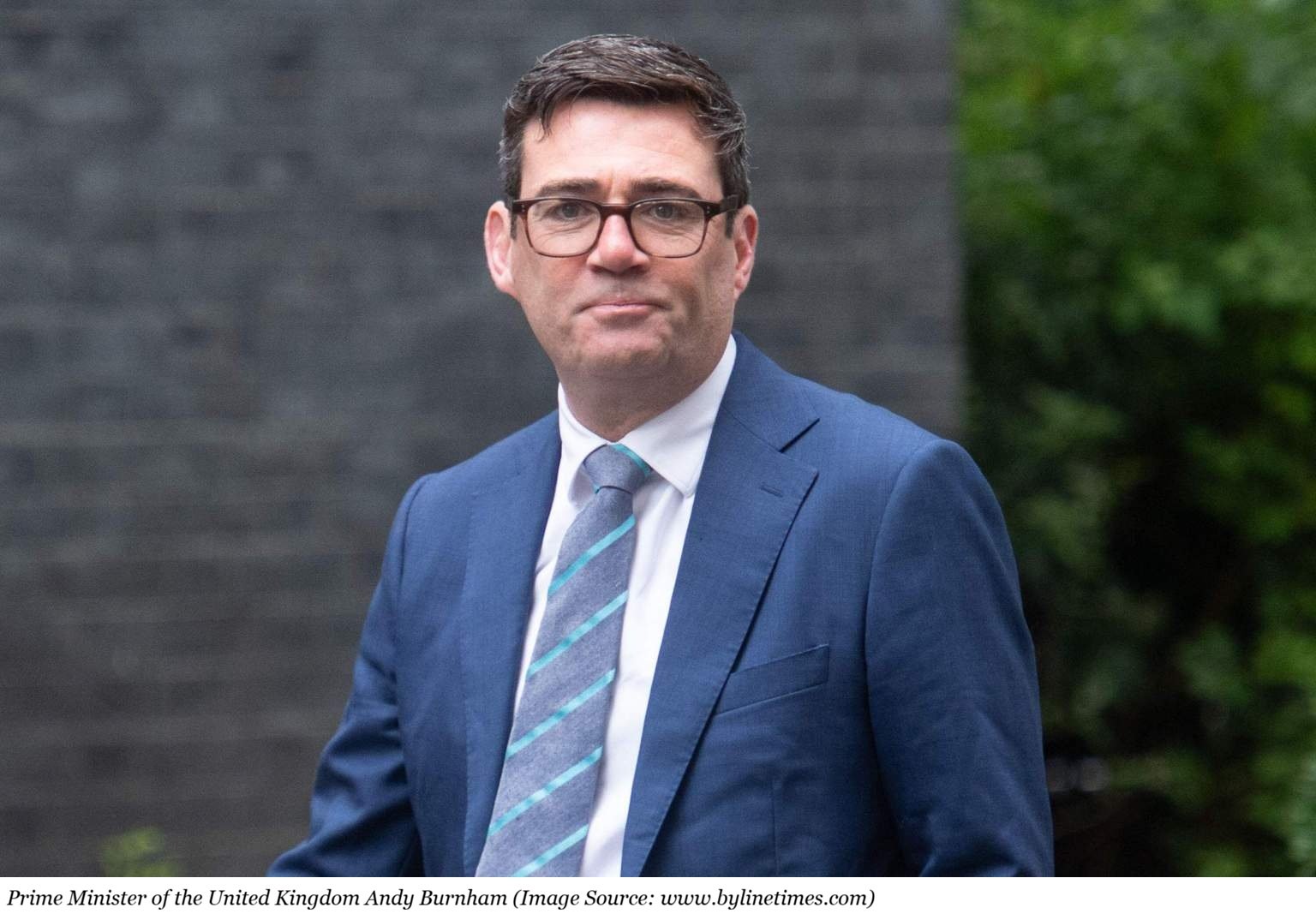
Andy Burnham is Britain's seventh prime minister in a decade and the second since Labour's landslide win in 2024. He takes over at an awkward moment: Labour is struggling to contain Nigel Farage's Reform UK – the right-wing populist party reshaping Britain’s political landscape - and to forge a sense of direction and harmony among its cadres and leaders. Moreover, Burnham inherits a government under serious fiscal and economic stress.
The significance of Burnham's premiership lies less in the fact of a leadership change than in the political instincts he brings to his office. Unlike many recent British prime ministers, whose careers were forged primarily within Westminster, Burnham has spent much of the past decade as the metro mayor of Greater Manchester, a regional executive role responsible for transport, housing and other devolved powers. Although the UK’s economic and institutional constraints leave little room for sweeping changes, Burnham’s experience in local government and his views on governance may bring a new direction to British politics.
A Different Route to Downing Street
Burnham's career has been an interesting journey. He was first elected in 2001 and served under Prime Ministers Tony Blair and Gordon Brown, eventually becoming Health Secretary in 2009 after a stint as Chief Secretary to the Treasury. He ran for the Labour leadership in 2015, lost to Jeremy Corbyn, and later chose not to challenge Keir Starmer. Instead, he moved outside Westminster altogether and became Mayor of Greater Manchester in 2017. These nine years have changed Burnham, who built a reputation for getting local councils, businesses, universities, civil society groups and public agencies to work together on regional development.
Burnham’s ideological pitch has barely changed over the years: too much political and economic power sits in London, weakening Britain's regions and dragging down national productivity. He has argued for years that metro mayors and regional governments need greater say over transport, housing, skills and economic planning. His preference is not simply for a larger state, but for a more reactive one. You could hear that line in his first words as prime minister, when he promised "the biggest changes in the last 40 years" — a line that reads as a direct challenge to the Thatcher-era model of centralised government and market-led restructuring, which he blames for deindustrialising Britain's regions and increasing the gap between them and London.
Rebuilding the State Through Regional Reform
Burnham's domestic agenda is likely to reflect his long-standing belief in regional economic renewal and institutional reform. While his government would probably maintain broad continuity in macroeconomic management, it is also expected to adopt a more interventionist approach to public services, industrial policy, and regional development than his predecessor's.
Ideologically, Burnham belongs to Labour's mainstream social-democratic tradition. He has consistently defended strong public services, active government and social justice. He has emphasised improving the effectiveness, accountability and responsiveness of public institutions. Regional development is likely to become the organising principle of his domestic programme. Burnham has long argued that Britain's highly centralised political system has widened disparities between London and the rest of England. As Prime Minister, he would seek to extend the principles he pursued in Greater Manchester by devolving greater authority over transport, housing, vocational skills and economic planning to cities and regions.
Burnham’s approach also reflects broader trends in comparative public administration. Countries such as Germany and several Nordic states have stronger regional governance systems. They have shown more balanced territorial development than highly centralised systems. Burnham has frequently cited these examples to argue that Britain's governance model should curb the excessive concentration of power.
Burnham’s economic strategy would likely place greater emphasis on rebuilding domestic manufacturing capacity through policies that favour British industry. Such an approach would mark a shift from the more market-facilitative policies associated with the Starmer government. Public utilities may also come under greater government oversight. Burnham has favoured greater state control of water and energy services, although Britain’s fiscal realities make outright nationalisation unlikely. Healthcare and social care are also likely to attract sustained attention. Burnham may revisit a version of the estate-levy proposal he advanced in 2010 to fund a national care service, partly to ease pressure on the National Health Service by reducing the number of patients who remain in hospital while awaiting long-term care placements.
Foreign Policy: Continuity with a Different Emphasis
Burnham's foreign policy instincts remain less clearly defined. Unlike Starmer, who invested considerable political capital in personal diplomacy, including hosting Donald Trump for a state visit, Burnham has spent most of the past decade focused on regional governance rather than international affairs. His inaugural address reflected that background. Foreign policy received only brief attention, largely limited to a commitment that Britain would honour its obligations to its international partners. Foreign Secretary Yvette Cooper has subsequently stated that the government remains fully committed to continued support for Ukraine and NATO, suggesting that Britain's core strategic commitments are unlikely to change significantly.
Where Burnham may differ from his predecessor is in diplomatic emphasis rather than in strategic direction. His first major foreign policy intervention — an opinion article calling for "even closer" cooperation with the European Union on economic and diplomatic matters — suggests a leader inclined to place greater weight on relations with Europe, particularly at a time when UK-US ties have been strained under a second Trump administration.
His approach towards China also appears more pragmatic than ideological. Burnham has previously connected with Chinese diplomats on issues such as green technology and manufacturing. His future approach too is likely to reflect an economic rather than a primarily security-oriented perspective. Britain's industrial strategy continues to depend heavily on critical minerals refined in China, creating strategic dilemmas that his government would find difficult to avoid.
The Limits of Ambition
The success of Burnham's government will ultimately depend less on his plans and ideas than on the constraints facing Britain. His room for manoeuvre is limited. Limitations set by economic conditions, Labour's internal solidarity, relations with the devolved administrations, and an increasingly uncertain international environment are likely to dampen his plans to introduce major policy changes.
The most pressing constraint upon him is fiscal. Britain today has the highest borrowing costs among the G7 economies, leaving little scope for large public welfare spending. Weak productivity growth, an ageing population, rising healthcare expenditure and sustained pressure on public finances would also constrain his government's capacity to implement ambitious reform programmes.
Immigration poses another major political challenge. It remains one of Reform UK's core electoral issues, yet Burnham has largely avoided discussing it or making it part of his political agenda. How his government tackles this issue could affect both Labour's electoral prospects and his own appeal. Institutional resistance also matters. The British system has generally been reluctant to embrace rapid constitutional or administrative change. Even reforms with broad political support often encounter resistance within the government.
Andy Burnham's arrival at Downing Street represents neither a wholesale departure from Britain's recent past nor a story of simple continuity. His greatest challenge lies in managing popular expectations. His image as an energetic reformer is likely to fuel hopes that exceed what Britain's economic and political circumstances would permit. Therefore, the more likely outcome of Burnham’s assumption of power in the UK is a gradual institutional change rather than a decisive break with recent policy.
(Dr. Amit Dholakia is the Head of Political Science Department at The Maharaja Sayajirao University of Baroda. Follow him on X: @Amit_Dholakia)