


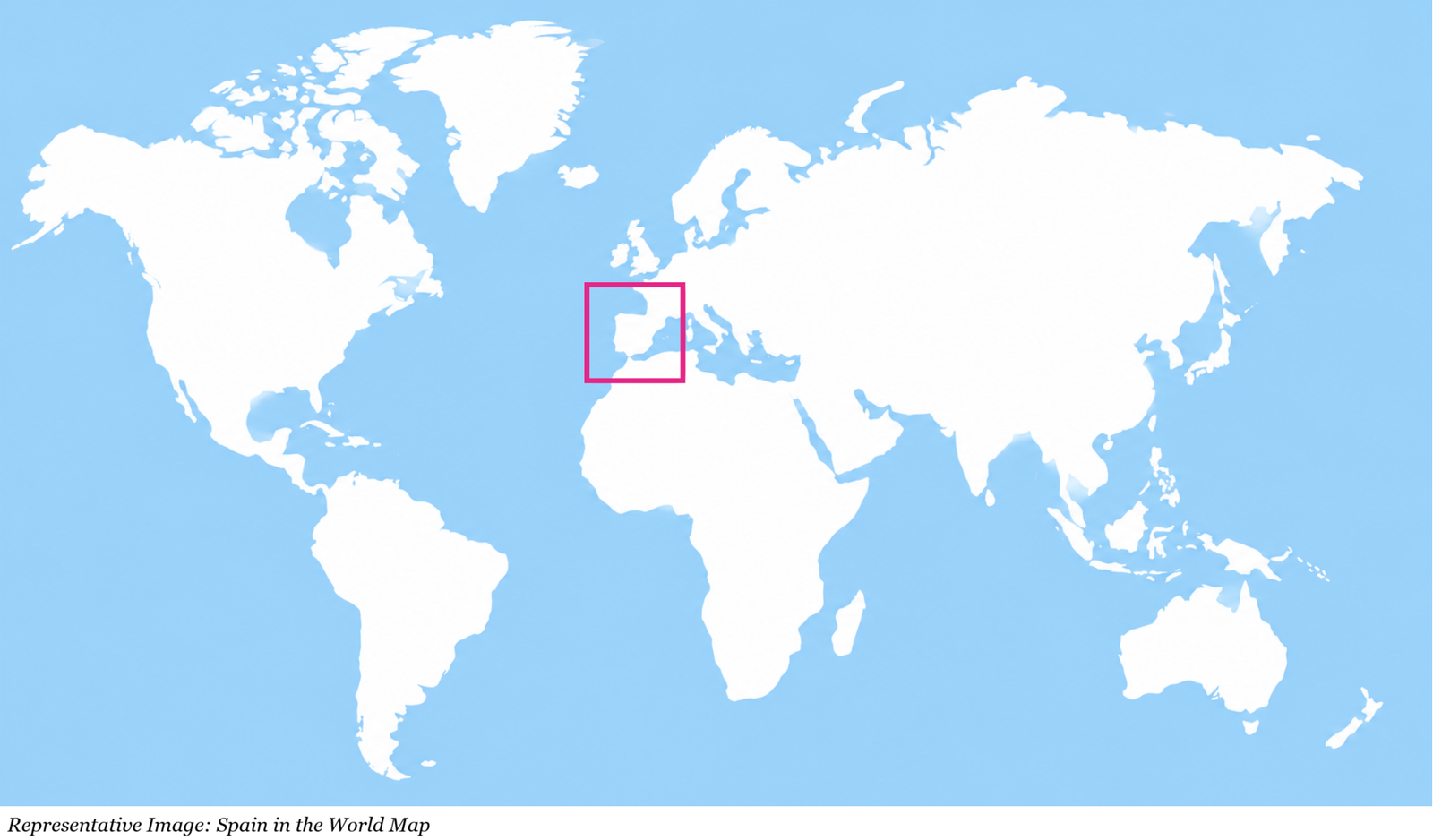
In the recently concluded FIFA World Cup, Spain emerged as the champion. Spain won the title by defeating Argentina 1-0 in the final match played on 19th July. So, Spain won the Men’s Football World Cup for the first time since 2010. Apart from the Men’s Football World Cup, Spain is also the current champion of Women’s Football World Cup. The Spanish Women’s Football Team became won the football world cup in 2023. The very next year, in 2024, Spain’s Men Football Team won a gold medal at the Paris Olympics. This same team won the Euro Cup, also in 2024. It means, at present, the Spanish Men’s and Women’s Football Teams are champions in all the major international football tournaments.

Since the start of this World Cup, Spain was one of the contenders for the title. However, Spain did not have high-profile players like other teams. Spain’s emphasis was on the entire team and not on one or two players. Teamwork proved to be instrumental in Spain’s victory.
Absence of high-profile players or star players also meant that Spain’s football team did not have the glamour that other teams command. And neither is Spain’s style of playing football very attractive. Spain’s coach Luis De La Fuente prioritized system and process over individual players. Along with teamwork, Spain marched forward with hard work, discipline and confidence. And the results are there for everyone to see.
The characteristics displayed by Spain’s Football Team are representative of Spain as a country. Be it Spain’s domestic politics, foreign policy or Madrid’s participation in the international order – one thing is common across all the platforms – everywhere system is given more importance than an individual. This is the reason that like in domestic politics, Spain supports a democratic system in the global order as well.
The root of Spain’s political perspective could be traced back to the Spanish Civil War. Following the civil war that lasted from 1936 to 1939 military leader Francisco Franco came to power. After Franco came to power, Spain had to face international isolation for more than a decade. In the 1950s the United States took steps to improve relations with Spain and gradually Madrid became a part of the international system. The United Nations admitted Spain as a member in 1955. In 1982 Spain became a part of the NATO while in 1986 Spain joined the European Union.

Having remained isolated at international level for a long time has cultivated a strong sentiment in Spain to be a part of a system or an organization. Spain’s commitment to teamwork or to be a team player stems from this sentiment. Prioritizing cooperation while protecting own interests is a part of Spain’s foreign policy.
Great Spanish philosopher José Ortega y Gasset had said that if Spain is the problem, Europe is the solution. However, Ortega y Gasset had made this statement several years before the Spanish Civil War. But this statement highlights the awareness about democracy and politics of cooperation among the Spanish people and intelligentsia.

It’s not that Spain has never faced any challenges. In the last 15 years, Spain has faced a lot of challenges and difficulties in domestic politics as well as at global level. If we talk about Spain’s domestic politics, then in the past one decade, no party has won the majority in the general elections. All the governments that Spain had since 2015 have been formed through alliances between several parties. The present Pedro Sánchez-led Socialist Party government is also running on support of several alliance partners. However, in Spanish politics, the responsibilities of the ruling and opposition parties are fixed. An important feature of Spain’s democracy is that there must always be a government in power, irrespective of the political party and the post of the president of the government can never remain vacant. In Spain, an opposition party can bring a no-confidence motion against the government only if it has an alternate arrangement and a leader ready to lead the new government.

Perhaps this is the reason why despite there being multiple economic challenges in the world and in Europe, that Spain’s economy is in a better shape that the economies of other major European countries. The International Monetary Fund projects 2.09% GDP growth for Spain in 2026.
Spain’s recent politics may appear to be going against its image of being a team player. In particular Spain’s stand on the US-Iran war and Madrid’s differences with Washington may indicate a policy totally opposite of cooperation.
But then, having a different stand would be construed by Spain as an exercise of its democratic right.
(Niranjan Marjani is the Editor-in-Chief of Global Horizons. Follow him on @NiranjanMarjani)