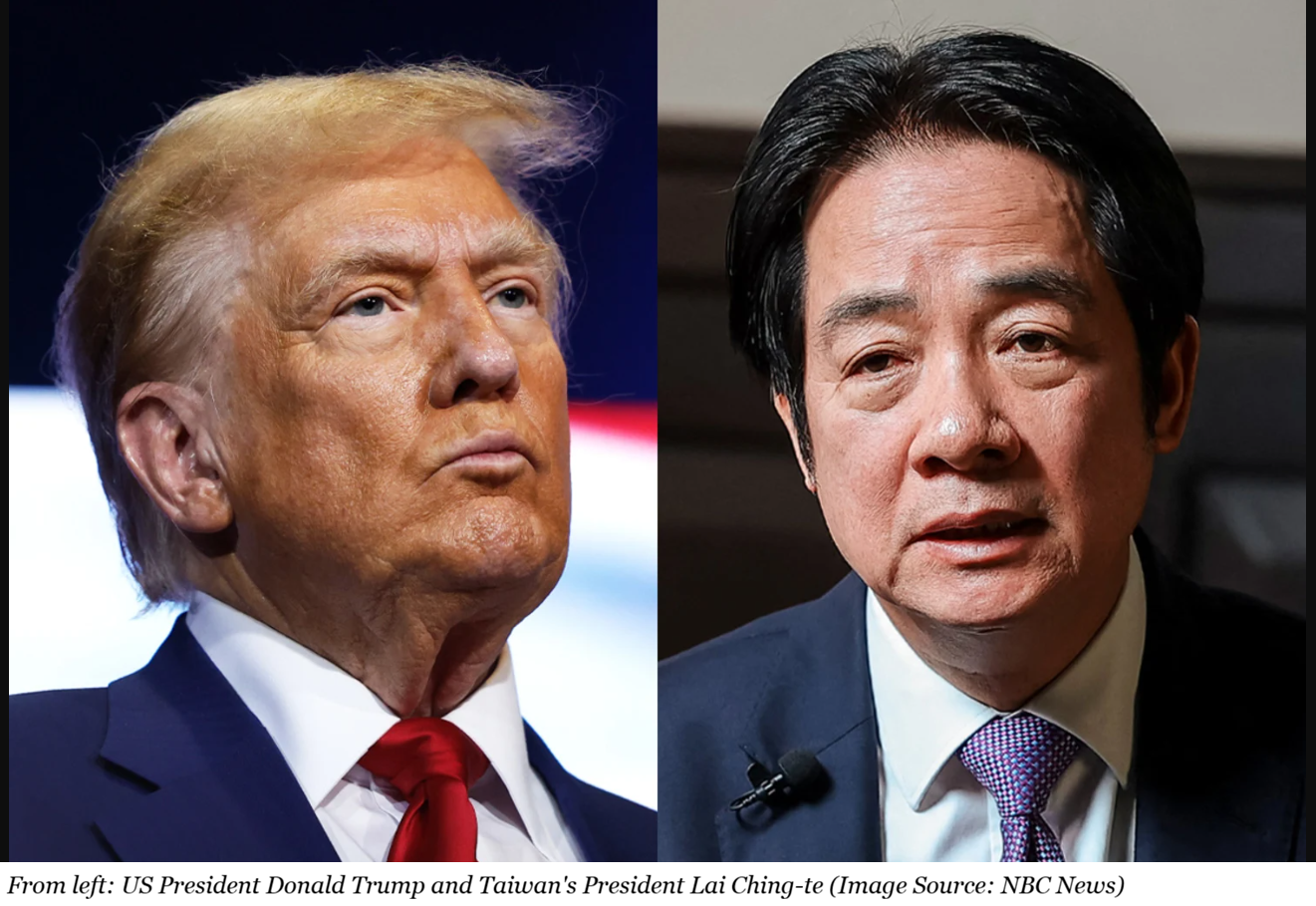
Taiwan and Iran are very different strategic theaters. Their geography, military environment and strategic importance to the United States are not comparable. Yet the Iran crisis raises a question Taiwan cannot ignore: what happens to American credibility when Washington must manage several major crises simultaneously?
The issue is not whether the United States remains the world's leading military power. It clearly does. Its global network of alliances, overseas bases and ability to project force remain unmatched. But power and the availability of power are not the same thing. This may be the first lesson Taiwan can draw from the Iran crisis.
Military superiority does not automatically produce political success. A great power can strike targets, deploy fleets, impose sanctions and increase pressure on an adversary. Yet achieving the desired political outcome is often much more difficult. Iran does not need to defeat the United States militarily. It only needs to prolong the confrontation, increase its economic and political costs and force Washington to devote more resources and attention to the Middle East.
That distinction matters for Taiwan. In a Taiwan contingency, China would not necessarily seek to defeat the United States globally. Its objective could simply be to make American intervention sufficiently costly, risky and politically difficult to create hesitation in Washington. Credibility therefore depends not only on military capability, but also on political willingness to sustain the costs of action.
The second lesson concerns strategic dispersion. Today, Washington must simultaneously manage the Middle East, support Ukraine, reassure Europe, deter Russia and maintain stability across the Indo-Pacific. None of these commitments can simply be abandoned. The challenge is therefore not necessarily American decline. It is American dispersion. Even a superpower must decide where to concentrate its military assets, political attention and strategic resources. Ships, missile-defense systems, intelligence capabilities and precision weapons are considerable, but they are not unlimited.
For Taiwan, this should neither create alarm nor encourage complacency. It should encourage strategic realism.
There is, however, one essential difference. Taiwan occupies a far more central position in American strategy than Iran. Located at the heart of the first island chain and home to the world's most advanced semiconductor industry, Taiwan represents a vital strategic interest for the United States and its Indo-Pacific allies. American policy toward Iran should therefore not be used to predict American behavior toward Taiwan. But the Iran crisis still offers an important lesson.
Security guarantees ultimately rest on three pillars: capability, credibility and endurance. The United States unquestionably possesses the first. The more difficult questions concern the other two.
Taiwan's security should therefore not depend solely on asking whether America would defend the island. Perhaps the more important question is under what international circumstances Washington would have to make that decision. A Taiwan crisis occurring while the United States is simultaneously managing conflicts in the Middle East and Europe would inevitably complicate American strategic calculations.
This is precisely why deterrence remains so important. The objective is not only to prepare for war, but to convince Beijing that initiating one would carry unacceptable military, political and economic costs. Taiwan's own defense capabilities therefore remain essential. The stronger Taiwan becomes, the more credible external support also becomes.
The Iran crisis does not teach Taiwan that America is withdrawing. Nor does it prove that American protection is guaranteed. It teaches something more subtle. American power remains immense, but even immense power operates under constraints. Credibility depends not only on how much power a nation possesses, but also on how quickly it can concentrate that power, how long it can sustain it and what political costs it is prepared to bear.
Taiwan should therefore watch the Iran crisis not because it predicts Taiwan's future, but because it reveals how great-power credibility is tested when multiple crises begin to overlap.
Perhaps that is the most important lesson of all.
(Gilles Touboul is a geopolitical analyst and former international currency trader with expertise in Middle East and Asia)