


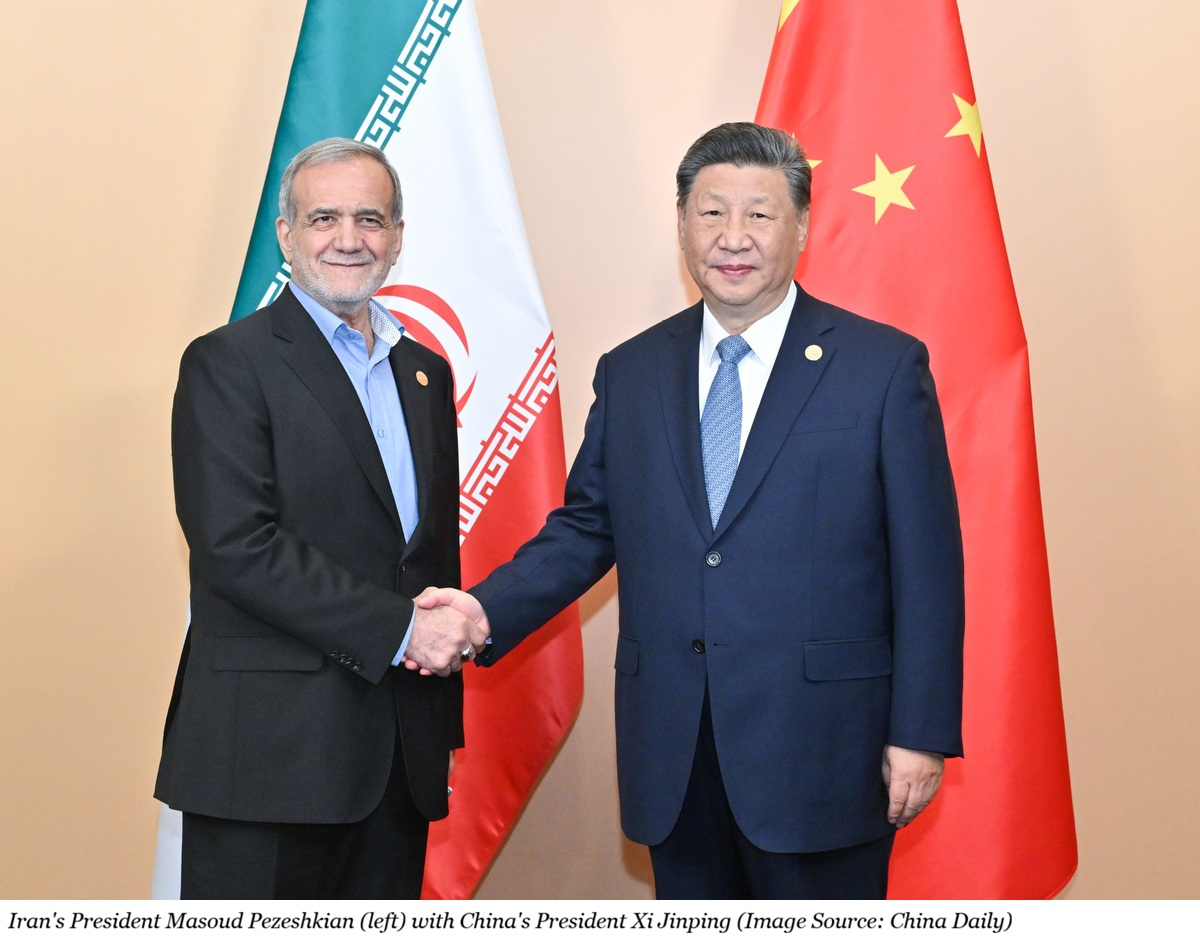
Since the conflict between Iran and the United States began, China’s role in the Middle East can be hard to figure out.
Beijing often criticizes Washington, speaks out against strikes on Iran, defends Iran’s sovereignty, and rejects American sanctions. Still, China does not give Iran any real military support and is careful not to get involved in the war.
This is likely not a contradiction. In fact, it is a key part of China’s strategy.
China supports Iran, but it does not want to be its military ally like the United States is for some of its own partners.
For Beijing, having a strategic relationship with a country does not mean it will defend that country with military force if it is attacked. China wants Iran to stay an important regional power, a political partner, and especially an energy partner. But it does not want to be responsible for Iran’s security.
This approach is sometimes called Chinese strategic discipline. China wants to be involved enough to have influence, but not so involved that it gets stuck in the conflict.
Since the war began, Beijing has repeated the same principles: respect for sovereignty, territorial integrity, non-interference, and a return to negotiations.
In June, Wang Yi spoke publicly about the “lessons” from the conflict, saying that a country should not seek its own security at the expense of others.
China is also using this crisis to promote its own view of international relations.
But behind these big ideas, there is a more practical logic.
China’s main priority is energy.
A large part of China’s oil comes from the Middle East, and the Strait of Hormuz is very important for Beijing. However, when shipping was disrupted, China did not send its navy to keep ships moving.
Instead, China used its reserves, cut back on some imports, adjusted its refineries, and looked for oil from other places.
This is a key difference.
China’s first response is to reduce its dependence, not to react with military force to every crisis. Its second priority is not to choose a side definitively.
Beijing keeps strong ties with Iran but also wants good relations with Saudi Arabia, the Emirates, Qatar, Kuwait, Jordan, and even Israel.
So, China has to be careful.
Sometimes, Gulf countries want China to have more influence over Tehran. But if Beijing pressures Iran too much, it could lose some of its influence. If it does nothing, it could disappoint its Arab partners.
China is therefore always trying to find a balance in Gaza and Lebanon.
Beijing criticizes some Israeli actions, supports the Palestinian cause, backs a two-state solution, and insists on the sovereignty of countries in the region.
But China avoids acting as a defender of Hamas or Hezbollah.
Supporting the Palestinians does not mean supporting Hamas. Defending Lebanon’s sovereignty does not mean being Hezbollah’s protector. And supporting Iran does not mean taking on all of Tehran’s alliances in the region.
China does not want to take on Iran’s network of alliances.
The United States is now pushing the limits of this strategy.
By increasing sanctions on Tehran and warning countries that keep trading with Iran, Washington is clearly trying to make Chinese support more costly.
Beijing rejects these sanctions and says it wants to protect its interests. So far, though, Washington has not directly targeted the biggest Chinese banks.
Both countries are testing their limits, but neither wants the Iran issue to become a direct confrontation between the United States and China.
This is one of the most interesting parts of the current situation.
It is also important to consider the Mecca defense agreement between Saudi Arabia, Turkey, and Pakistan.
Although China is not directly involved in this arrangement, it may have significant implications for the nation.
First, it demonstrates that several nations in the area wish to develop their own security systems rather than entirely depending on other forces.
This could be excellent news for Beijing. China is less likely to be compelled to choose between two possibilities it wishes to avoid: remaining entirely on the sidelines or turning into a military force tasked with defending the region, if nations in the region manage their own security.
However, China is also at peril.
Beijing would confront a far more difficult situation if this accord developed into a true coalition to restrict Iran.
China would have to manage its connections with Saudi Arabia, which is essential for its energy needs, Iran, which is still a strategic partner, and Pakistan, one of its closest allies.
This new regional security group could make China’s strategy easier, but it could also make it much harder to keep things balanced.
This is also why China is not trying to take the United States’ place in the Middle East.
Taking over from Washington is not just about gaining influence.
It also means protecting allies, keeping sea routes safe, maintaining military forces in the region, and sometimes stepping in during a crisis.
But Beijing does not seem willing to take on that role.
Instead, China wants more political, economic, and diplomatic influence, but with much fewer military responsibilities.
In the end, China’s plan could be quite simple.
Let the United States keep paying most of the costs for security in the Middle East, while China slowly increases its economic and diplomatic influence.
This is a smart strategy, but it has its limits.
It works as long as other countries accept that Beijing remains relatively in the background.
If Gulf countries start to feel that China is gaining economically from the region without helping with security, they might begin to question this approach.
If Iran feels that China is a strong partner when things are good, but less supportive when American pressure increases, Tehran might also rethink its relationship with Beijing.
For now, China is still able to keep its options open.
Since the conflict between Iran and the United States began, China’s strategy can be summed up like this: support Iran without being its military backer, defend stability without acting as the Middle East’s policeman, protect its interests without going to war, and make use of the space left by Washington without taking on the costs of American power.
In short: maximize influence while keeping obligations low.
Or, put simply: be involved without getting trapped.
(Gilles Touboul is a geopolitical analyst and former international currency trader with expertise in Middle East and Asia)