


A Strategic Buffer Becomes a Security Frontier
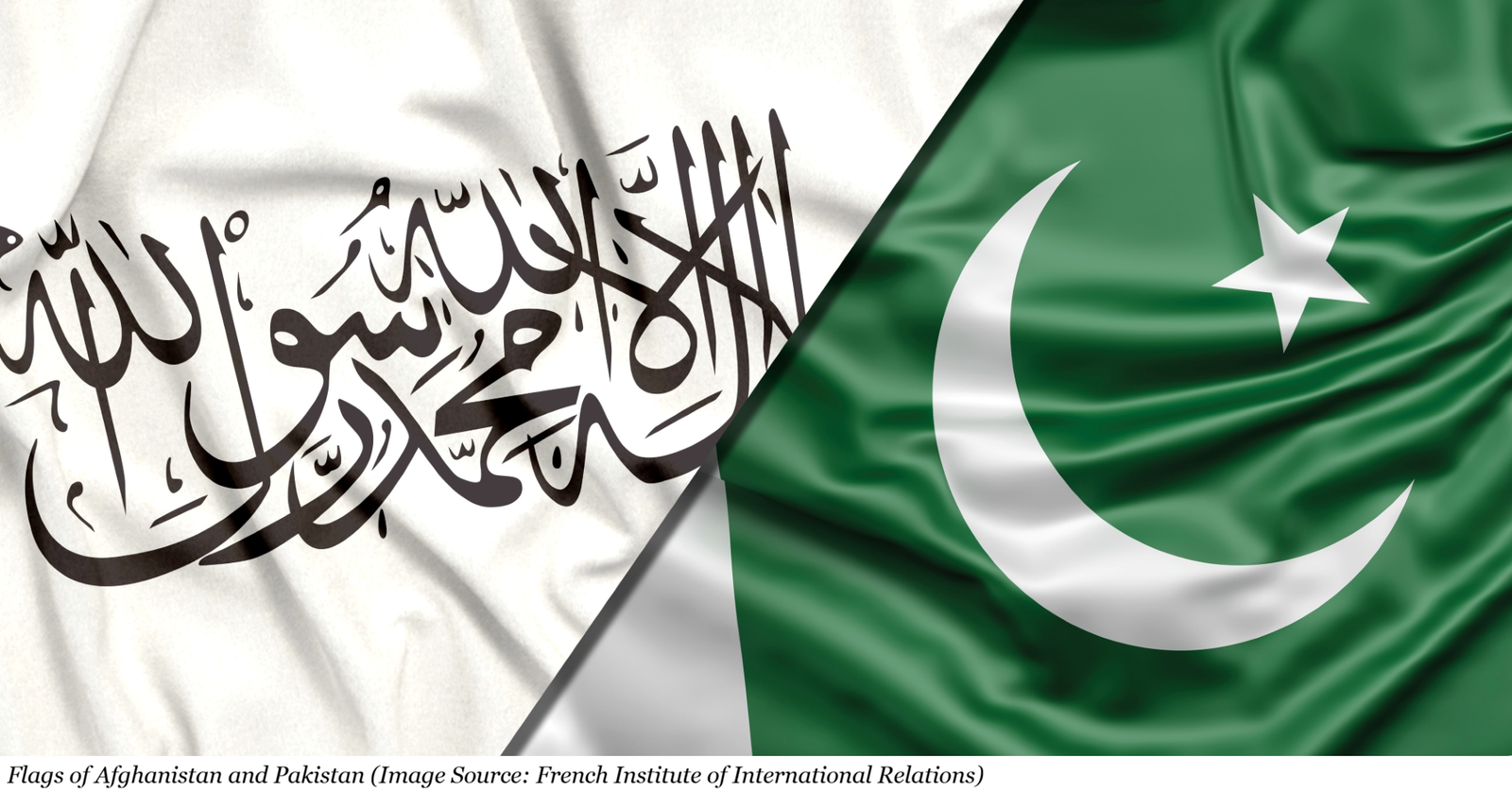
For decades, Pakistan viewed Afghanistan through the lens of strategic depth. A friendly government in Kabul, it reasoned, could secure its western flank, extend its regional influence and reduce the risks of strategic encirclement. The Taliban’s return to power in August 2021 appeared, at first, to offer Islamabad an opportunity to translate longstanding contacts into a more predictable relationship. Instead, the years that followed exposed the limits of that expectation. Militant violence, recurring border tensions and deteriorating relations with Kabul have turned Afghanistan from an imagined buffer into an increasingly difficult security frontier.
This reversal is not simply a failure of bilateral diplomacy. It reveals a more fundamental flaw in the doctrine: access to political actors across a border is not the same as authority over their decisions. A neighbouring government may be sympathetic on some questions while pursuing priorities that directly conflict with Pakistan’s security interests.
The TTP at the Centre of the Rift
The most immediate source of friction is Tehreek-e-Taliban Pakistan (TTP), a militant organisation fighting the Pakistani state. Islamabad accuses the group of using Afghan territory to organise or facilitate attacks inside Pakistan and demands action from the Taliban authorities. Kabul rejects Pakistan’s attribution of responsibility and resists being treated as accountable for violence across the border. The dispute has become a defining test of the relationship.
The TTP’s role in Pakistan’s security crisis has drawn sustained attention, including in reporting by The Diplomat and assessments of militant activity by United Nations monitoring bodies. These concerns cannot be dismissed. Yet broad assessments of militant presence and the attribution of any particular attack are different evidentiary questions. Credible policy requires both a serious response to cross-border threats and a disciplined process for establishing what happened, who was responsible and what corrective action is possible.
Why Ideological Proximity Failed to Deliver Cooperation?
Pakistan’s earlier calculations rested in part on an assumption that ideological affinity would produce aligned security interests. The Afghan Taliban and the TTP have historical and ideological connections, but they are not interchangeable organisations. They operate in different political settings and pursue distinct objectives. The Taliban authorities must weigh regime survival, internal cohesion, relationships with armed factions and the costs of confrontation. None of these calculations necessarily places Pakistan’s security demands first.
Islamabad has therefore pressed for concrete, verifiable assurances that Afghan territory will not be used to mount attacks. Kabul’s resistance to Pakistan’s framing of the problem has left both sides trapped in a cycle of accusation and denial. Without an agreed mechanism to examine incidents, share evidence and assess compliance, every new episode of violence risks becoming another argument over responsibility rather than an opportunity to reduce the threat.
Coercion Has Costs and Limits
Pakistan has employed counterterrorism operations, diplomatic pressure, border restrictions and strikes it describes as targeting militant infrastructure in Afghanistan. At a 16 October 2026 briefing, Pakistan’s Ministry of Foreign Affairs again called for concrete and verifiable action. The obligation to protect civilians and security personnel is clear. The harder question is whether the chosen measures produce lasting improvements in security.
Cross-border military action may demonstrate resolve, but resolve is not an outcome. The relevant tests are whether attacks decline, militant networks lose operational capacity and the risk of renewed escalation diminishes. Civilian harm can deepen grievances and strengthen extremist narratives. Border closures, meanwhile, disrupt trade, transport and livelihoods on both sides of the frontier, often burdening communities with little influence over militant decisions. Coercion may create leverage; it cannot guarantee that leverage will be converted into cooperation.
A Practical Framework for De-escalation
A more durable approach would combine credible deterrence with persistent, evidence-based diplomacy. The first requirement is a channel through which the two governments can investigate cross-border incidents, exchange relevant intelligence and evaluate disputed claims against agreed standards. Such a mechanism would not eliminate mistrust, but it could reduce the space in which unverified accusations drive retaliation.
Second, security commitments should be specific enough to assess. Rather than treating border closures as an indefinite substitute for policy, both sides could consider phased restoration of trade linked to observable steps that reduce risks. Regional partners including China, Qatar, Türkiye and Russia might help facilitate dialogue, although outside mediation cannot replace political decisions in Islamabad and Kabul.
Third, Pakistan’s Afghanistan policy must be matched by stronger domestic capabilities. Effective policing, intelligence coordination and public trust are indispensable to disrupting militant recruitment and operations. Even substantial cooperation from Kabul would not remove the need to address the conditions and networks that allow armed groups to function within Pakistan.
The Real Measure of Strategic Success
Pakistan’s predicament illustrates the danger of building a security doctrine around assumptions about another state’s future behaviour. Ideological kinship does not ensure common priorities. Political influence does not confer operational control. And a friendly government, even where one exists, cannot be treated as a substitute for resilient domestic institutions.
The lesson of strategic depth in reverse is therefore larger than the present dispute with Kabul. Security is not measured by the influence a state believes it holds beyond its borders, but by its ability to protect people, contain violence and manage conflict without making the next crisis more likely. For Islamabad, success will mean fewer attacks, safer border communities and a relationship with Afghanistan governed by verifiable commitments rather than inherited expectations.
(Samra Khaksar is a Research Analyst at the IndoGlobal Insight Research Foundation (IGIRF), an organisation registered under India’s Ministry of Corporate Affairs (MCA). She specialises in South Asian security, strategic affairs, geopolitics and international relations. Her research focuses on regional power dynamics, geopolitical competition, conflict and emerging security challenges across South Asia and the wider Global South. With experience in open-source intelligence (OSINT), she brings a research-driven perspective to contemporary geopolitical and security developments. She has also undertaken specialised training through the United Nations Office for Disarmament Affairs (UNODA), the United Nations Institute for Disarmament Research (UNIDIR) and the Basel Institute on Governance.)