


China has long understood how far it doesn’t want to go. But its expanding influence may now require it to consider how far it is willing to go.
The US-Iran dispute, the tensions in the Strait of Hormuz, China’s tight relations with Russia and the current incidents in the South China Sea may seem like separate crises. But they all pose the same question: Can Beijing keep extending its influence without taking on a greater share of the burden of international security?
Since Xi Jinping took over in 2012, Chinese foreign policy has been more visible, more ambitious, and at times more coercive. China is building infrastructure, creating alternative institutions, expanding its maritime footprint, and seeking to transform an international system still mainly based on American dominance.
Xi has not wholly forsaken his predecessors' caution. Instead, he has changed its focus. Historically, the rationale for restraint was mainly to defend China’s economic development. It now supports a far more vigorous policy of influence.
This is what might be called Chinese strategic discipline: maximize influence but restrict exposure. And it is not an official philosophy issued by Beijing. It is an analytical framework useful for explaining numerous characteristics of Chinese conduct.
The most obvious example is the Middle East. China needs Iranian oil, but it also needs Saudi Arabia, the United Arab Emirates, and the stability of the Gulf’s marine lanes. Thus, it can neither leave Tehran at Washington's behest nor defend Iran so vigorously that it jeopardizes its broader regional interests.
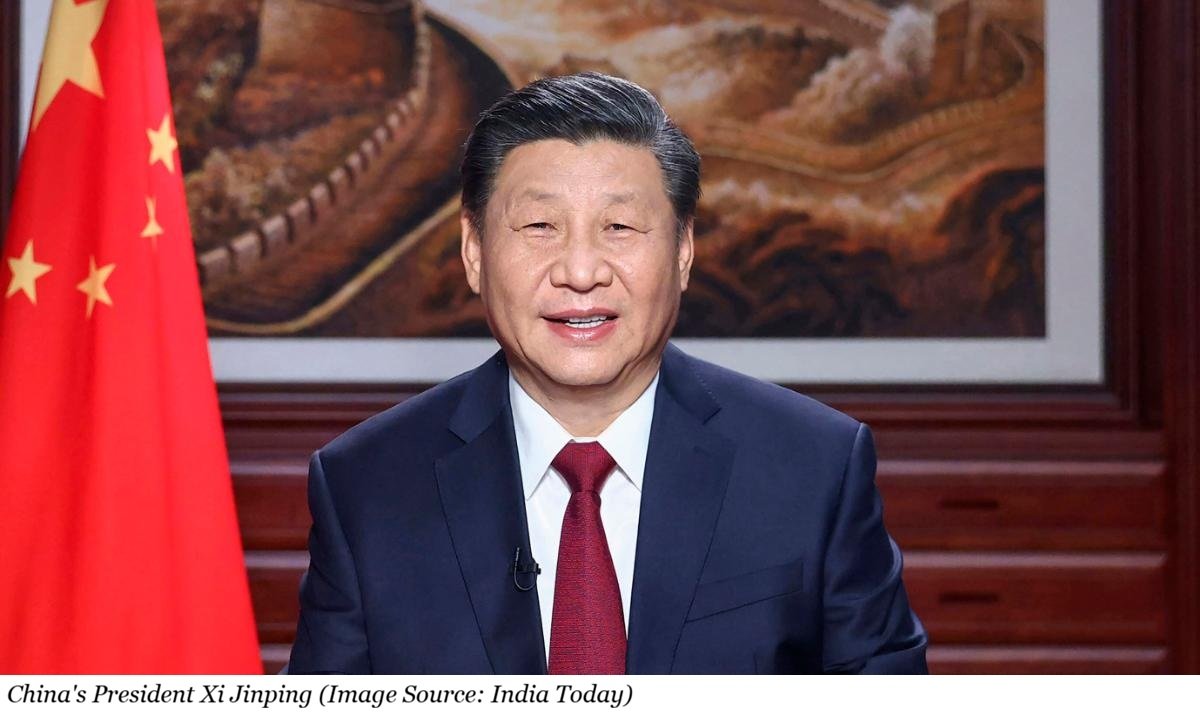
Beijing condemns US military action, defends Iran’s sovereignty and urges for the Strait of Hormuz to be reopened. At the same time, it urges Tehran to take into account the Gulf states' concerns. Xi Jinping advocated a new regional security architecture and said China is ready to cooperate with Middle Eastern countries to secure international maritime lanes.
But there is a significant difference. China is preaching security but is not yet the military guarantor of that security. It favors multilateral procedures and a significant role for the UN. Beijing wants to assist in shaping a new regional order without, at least for the time being, shouldering all the burdens borne by the United States.
It is not passivity. It seems China wants to keep various options on the table. If Beijing becomes too close to Iran, it risks losing its influence in the Gulf. If it is too distant, it leaves Washington with the power to dictate the destiny of a region vital to China's energy supply.
Here is another example of similar discipline of strategy in the South China Sea. In late October, the Chinese military conducted new combat-readiness patrols around Scarborough Shoal, which is disputed by the Philippines. Beijing is not acting as a mediator. It is putting direct pressure, growing its naval footprint and gradually shifting the balance of power.
But the process is still managed. China is slow and cautious, testing the waters with its adversaries and rarely making any one move that would instantly precipitate a confrontation with the United States. Strategic discipline is not the absence of coercion. It means the progressive employment of coercion and, as far as feasible, below the threshold of open war.
China’s relationship with Russia follows the same lines. Beijing is stepping up its cooperation with Moscow, rejecting its isolation and refusing to let the West alone establish the norms of the international order. China does not want Russia to set the level of confrontation between Beijing and the United States or Europe. It supports a strategic partner without committing to all the obligations of a traditional military alliance.
So far, this method has allowed China tremendous leeway. Beijing can talk to Iran and the Arab monarchies, work with Moscow without directly engaging in its fight, and pressure the Philippines without publicly pursuing a bigger battle.
But interpreting every manifestation of Chinese caution as evidence of strategic genius would be a mistake. Ambiguity can be comforting, but it can also breed distrust. Gradual pressure may prevent war, but it can also lead to disastrous miscalculation. And a nation that never wishes to be caught up in entanglements with its partners may one day cause its partners to wonder about its dependability.
Above all, as Chinese interests grow globalized, it is harder to separate influence from accountability. Can China continue to demand freedom of travel across the Strait of Hormuz while making no active contribution to protecting it against the threat? And if tensions rise in the South China Sea, can Beijing keep up controlled coercion indefinitely? Will China be able to maintain the same distance if Russia violates more red lines?
Chinese strategic discipline has enabled Beijing to offer support without full commitment, to exert pressure without instantly going to war, and to confront Washington without taking up all of America’s duties. But this approach may suddenly be a victim of its own success.
The main question isn’t whether China wants a larger role. That is the price China will one day be prepared to pay to maintain it.
(Gilles Touboul is a geopolitical analyst and former international currency trader with expertise in Middle East and Asia)