


India, the largest democracy and currently the fourth-largest economy in the world, is one of the major powers that is playing a constructive role in global affairs. While India’s foreign policy has been actively promoting and protecting India’s interests at the international level, it is pertinent to consider how India’s foreign policy has evolved over the past 79 years since independence in 1947.
Initial years in the post-independence period were marked by adhering to the Non-Aligned Movement (NAM), followed meticulously by India’s first Prime Minister Jawaharlal Nehru. For a newly independent nation like India, NAM was an important instrument in Nehru’s foreign policy that allowed India to stay out of the power struggle of the Cold War-era between the two blocs – the capitalist bloc led by the United States (US) and the communist bloc led by Russia, erstwhile Union of Soviet Socialist Republics (USSR). The principal intention behind staying out of power struggle was to focus on development and upliftment of own people.
However, now after 79 years of independence, India is seeking a greater role in global affairs. India is trying to achieve this through promoting the concept of multilateralism or multi-alignment. Multi-alignment implies collaborating with two or more entities having shared vision towards concerns like poverty, terrorism, economic recession etc.
Transition in India’s foreign policy
India’s foreign policy underwent a major transition in 1991 by opening of economy and adoption of liberalization. Following these changes, India’s ties with the West improved and gradually strengthened. Since 1991, following events have been standout in respect of shaping India’s external engagements.
First, the disintegration of the Soviet Union. The Soviet Union disintegrated by 1991 into 15 different countries and it heralded a new era in global politics. These developments also caused India to alter its worldview and make suitable arrangements in foreign policy. It resulted in India cultivating closer ties with the West. While India’s relations with Russia, Soviet Union’s successor, remained cordial, the West afforded India flexibility in conducting foreign relations.
Second, India started focused engagements with various regions. the first among them The Look East Policy, launched in 1992, was among the first of such engagements. Through this policy India started to interact more with Southeast Asian countries with which New Delhi had little cooperation of substance. This policy was later reframed as Act East Policy in 2014. This new policy is intended to add strategic cooperation to India’s ties with the Southeast Asian countries.
Third, the nuclear tests of 1998. In May 1998, India conducted nuclear tests and thereby joined the nations that had developed nuclear bomb. Despite facing sanctions from several countries of the West, most notably from the US, India stood its ground and cited security concerns from neighbours as the reason for building nuclear arsenal.
Fourth, the India-US nuclear deal. In 2005, India and the US signed a nuclear deal, also called the 123 Agreement. This agreement indicated the end to India’s nuclear isolation. This agreement facilitated India to acquire technology and fuel from the US for civilian nuclear facilities in India. In return, India agreed to separate its civilian and military nuclear facilities. This development not only allowed India to maintain nuclear power status but also deepened strategic cooperation between New Delhi and Washington D.C.
Conclusion
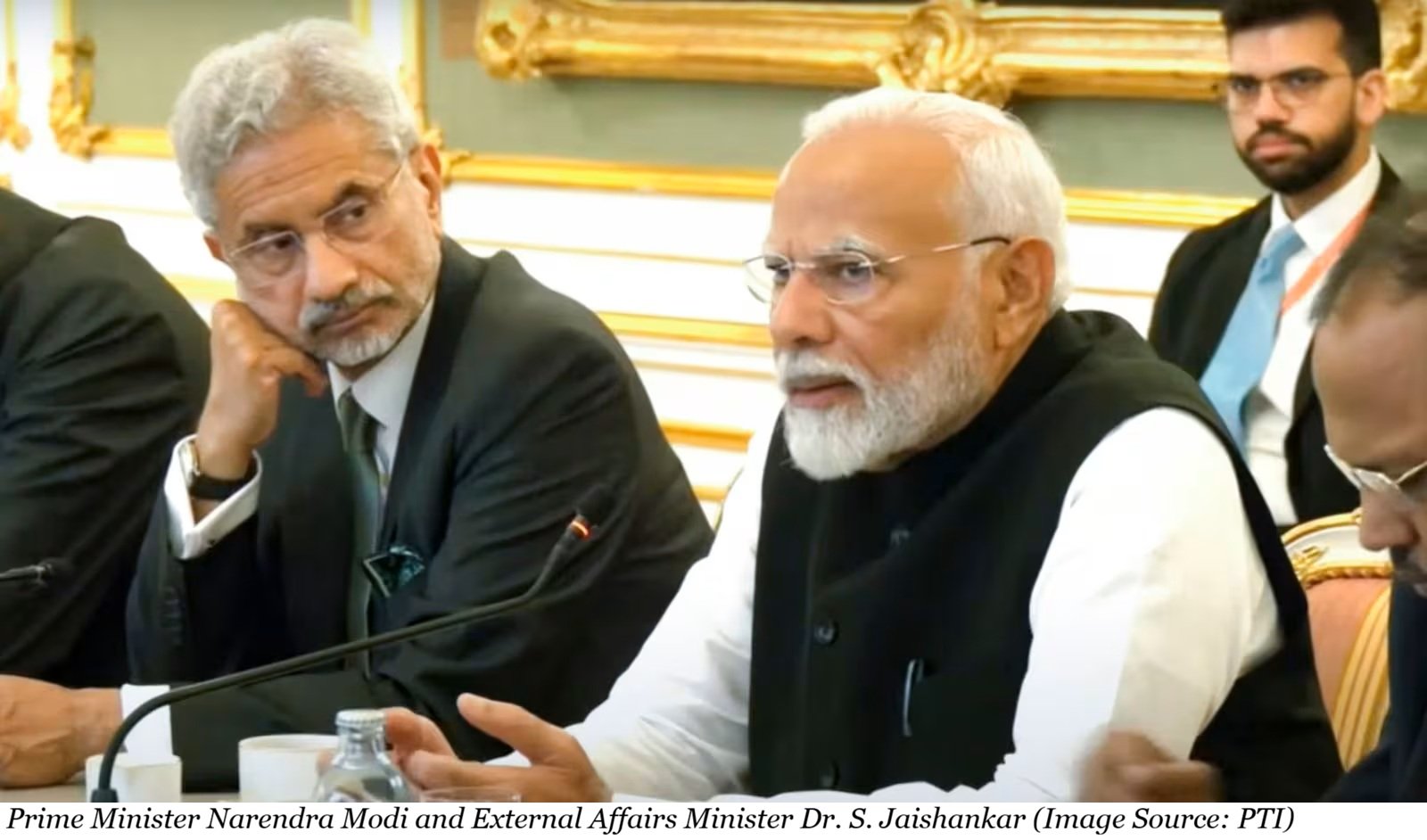
From Nehru’s vision of non-alignment to the realist approach of the Modi-Jaishankar duo, India’s foreign policy has come a long way. Strategic autonomy has been an important element in India’s practice of multi-alignment. This is evident in India’s engagements with the West as well as Russia.
Indian diplomacy prioritizes its own interests while dealing with either the West or the East, to seek benefits and long-term partnerships from nations of both the sides.
Speaking during a United Nations Session in 2023, Indian diplomat Ruchira Kamboj said, “India has shown that it is possible to maintain friendly relations with countries having different ideologies and governance models. This ability to navigate complex diplomatic waters showcases India as a potential mediator in international conflicts”.
As India navigates amid choppy waters of international politics, External Affairs Minister Dr. S. Jaishankar summed up India’s position: “India is not sitting on the fence. India is sitting on its own ground”.
(Pushpendra Singh Nirwan is a second year undergraduate student of B.A. in International Relations at Vivekananda Global University having keen interest in international affairs, diplomacy and India’s foreign policy. Follow him on X: @Pushpendra88760)