


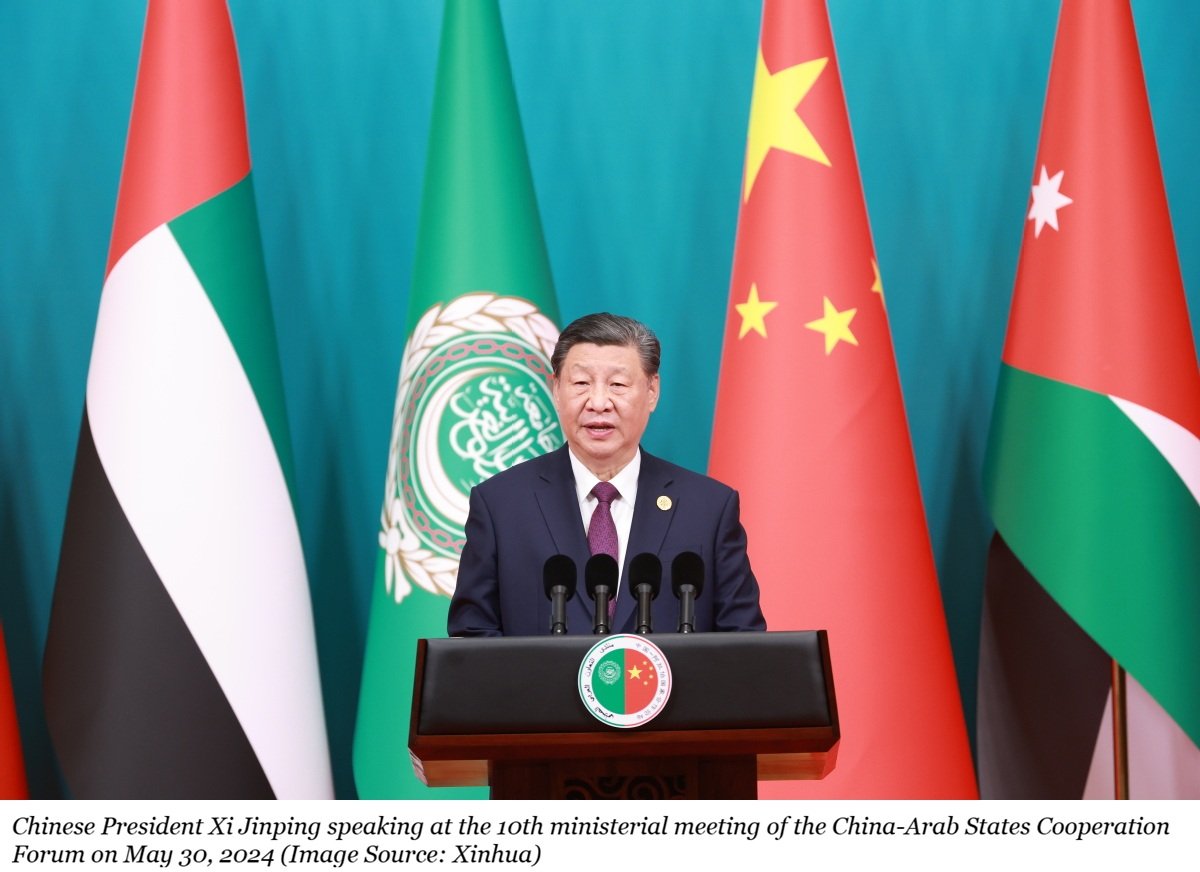
China is everywhere in the Middle East—and yet it seems to call the shots almost nowhere. It signs deals, finances projects, builds infrastructure. It speaks to everyone. It is visible in ports, industrial zones, digital networks, and major energy contracts. But when the conversation shifts to security, deterrence, guarantees, or red lines, Beijing steps back. That gap is not a contradiction. It is a method. China wants influence—without paying the bill.
The position makes more sense if we invert the question. Beijing is not attempting to become America in the area. It is trying to benefit from an order that already exists, widen its room for maneuver inside it, and let others absorb the cost of storms. For China, the Middle East is an intersection of flows rather than a platform for campaigns. Politics can continue to be purposefully unclear as long as the flows continue.
The Middle East from Beijing: A Factory of Continuity
China’s first motive is simple: continuity. Continuity of energy supplies, continuity of sea lanes, continuity of contracts, and continuity of worksites. Beijing does not need a Middle East that is aligned; it needs a Middle East that remains functional. That is the difference with powers that project a worldview onto the region. China imposes a requirement: keep the tap open, keep shipping moving, and keep uncertainty from exploding.
While energy plays a central role in this logic, it's important to remember that the Middle East serves as a market, a logistics corridor, and an intersection connecting Africa, Europe, and Asia. Therefore, Beijing's engagement in the region is primarily focused on infrastructure, including pipes, ports, platforms, and predictable access. In a global economy that prioritizes timing, a delayed cargo can be more strategic than a dramatic speech.
And above all, Beijing wants to preserve a rare privilege in the region: it can talk to everyone. To Gulf monarchies for energy and investment. To Iran for strategic depth and sanctioned trade. To Israel for technology and innovation. To Egypt for geography and symbolic centrality. To Iraq for energy and reconstruction. This versatility is a strength—and a fragility. The day China visibly picks a side; it loses the cross-cutting access that makes it so valuable.
Why Beijing Avoids the Hard Side: The War of Guarantees
People often say China is strategically limited in the Middle East. In reality, it limits itself—on purpose. Real strategic power is not a speech; it is an obligation. Guarantee an ally, and you accept defending them. Deter an adversary, and you accept risking escalation. Secure a sea lane, and you accept incidents, retaliation, and humiliation.
There is also a cultural and bureaucratic dimension. China’s statecraft is comfortable with the slow: long contracts, patient accumulation, quiet standard-setting. Crisis management in the Middle East often demands the opposite: rapid decisions, public signals, credibility tests, and escalation control. Beijing prefers risk minimization over dramatic commitment. I it is that the cost-benefit ratio is unattractive when compared to the Indo-Pacific, which remains China’s primary strategic theater.
And then there is the uncomfortable truth Beijing rarely says out loud: regional security has long been structured by the United States. You can criticize Washington, dispute its choices, and call for autonomy—but the American system has, in practice, provided a degree of stability for routes, straits, and balances. China benefits from that architecture the way one benefits from streetlights: you move more easily without paying for the bulbs. As long as the U.S. remains the central security anchor, China can stay the major economic actor—and settle for general statements, pious wishes, and calculated restraint.
The Real Ambition: Weaken the US Monopoly Without Getting Hurt
China is not necessarily trying to push America out of the Middle East. It is trying to weaken the monopoly—to break the assumption that there is only one provider of partnership, financing, technology, and market access. Beijing advances by dilution. The more options regional states have, the more Washington loses the privilege of ultimatums.
This is why China’s influence often looks “structural” rather than theatrical. It invests in interdependence. When an economy depends on logistics chains, access to the Chinese market, technology standards, and financing, influence becomes embedded. It does not need to speak in threats; it speaks through priorities, delays, supplier choices, and quiet trade-offs. It is a power of adjustment, not of spectacle.
At the same time, Beijing carefully protects its brand: non-interference, respect for sovereignty, “development first.” In the region, this message resonates with governments that are tired of conditionality, lectures, and public moralizing. China offers a partnership that feels politically lighter—at least on the surface.
But the brand also serves Beijing itself. Non-interference is not only a principle; it is a shield. It provides China with a defense against the region's moral and sectarian conflicts. It helps Beijing avoid being cornered into choices that would damage its commercial position. And it keeps China free to adjust when the regional wind changes.
The Hidden Risk: Economics Cannot Stay Separated From Security Forever
This is where Beijing’s model becomes fragile. The day the Middle East tips into a major crisis, China runs into a blunt question: if you are economically central, where is your share of risk? Partners will want more than statements; they will want protection, intelligence, coordination, and guarantees. Rivals will test China’s credibility. Local actors will discover that “pressure on China” can mean pressure on its projects and citizens, not just on its diplomacy.
For now, Beijing answers by doing just enough: limited naval presence, quiet crisis diplomacy, evacuation capabilities, selective mediation, and pragmatic deals. It advances in increments—never in leaps. It tries to look useful without looking responsible.
This is rational, but it has a ceiling. If the United States reduces its role, or if a regional war disrupts key chokepoints, China may have to decide whether it wants to remain a beneficiary of stability or become a producer of it. And producing stability is not a slogan. It requires alliances, commitments, and the willingness to take risks publicly. That is precisely what Beijing has avoided.
A Strategy of Time
China’s Middle East strategy is often misunderstood because observers expect great powers to behave in familiar ways: military bases, alliances, red lines, and intervention. Beijing is trying something different. It is betting that long-term economic centrality, technological standards, and logistical control can deliver influence without the political costs of dominance. in this region, economics is never fully separable from security. Beijing knows it. And that is precisely why it moves slowly—as if time were its best ally.
In the end, China’s posture is not indecision. It is a disciplined refusal to be trapped into other people’s wars, a preference for leverage over heroics, and a bet that the region will continue to need Chinese money, Chinese markets, and Chinese infrastructure more than it needs Chinese soldiers. Whether that bet holds will depend less on China’s wishes than on the next major shock—because in the Middle East, shocks are the only truly reliable timetable.
(Gilles Touboul is a geopolitical analyst and former international currency trader with expertise in Middle East and Asia)