


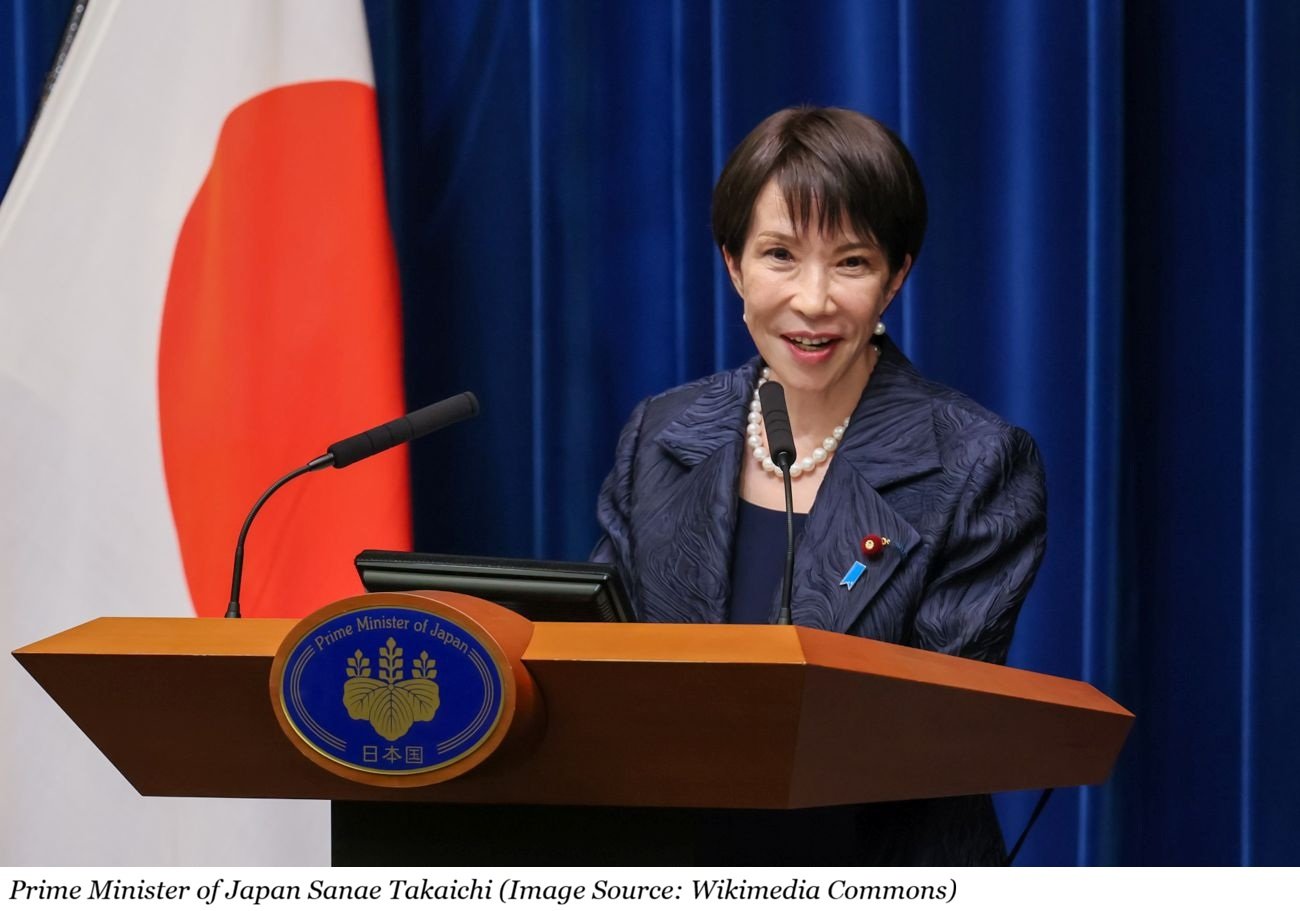
The victory of Sanae Takaichi in the legislative elections on 8 February 2026 is not only a change of leadership; it is a change of strategic latitude. It transforms a political line already in gestation (security, rearmament, strategic firmness) into a parliamentary mandate. Japan moves from a country that 'adjusts' to a country that can decide earlier, higher up, on issues that structure Asia: China, Taiwan, American alliance, rearmament, technological chains.
A Strong Mandate: Internal Stability, External Acceleration
The message of the ballot box is first institutional: the opposition appears to be dispersed, and the LDP becomes the government’s matrix again. This stability gives Sanae Takaichi space to accelerate an agenda. If the executive is mistaken, it will no longer be able to invoke the argument of parliamentary constraint. The first effect is mechanical: a supermajority reduces the capacities for parliamentary blocking and gives Sanae Takaichi a clear mandate to develop his already known line, notably on national security and defense.
But stability has a cost: when you win widely, you bear 'alone' the responsibility for the consequences. In other words, victory removes the alibi of the 'impossible compromise'. It creates a credibility test: can Japan increase in power without fracturing or putting itself at budgetary risk?
The Geopolitical Heart: China As a Compass
With Sanae Takaichi, China becomes more explicitly the compass of Japanese foreign policy. a strengthening of defense is likely to further strain the relationship with Beijing, already irritated by its statements on Taiwan.
Beijing, precisely, reacts in a dual way: on the one hand, the official discourse downplays ('our policy will not change for an election'); on the other hand, the Chinese government keeps in mind the Japanese political grammar: any acceleration on budgets, typing capabilities, where doctrinal normalization is read through the prism of the 'return of militarism'.
Taiwan: The Shadow That Restructures Alliances
The subject of Taiwan acts as a 'revelator': it links Japan to American credibility, while exposing Tokyo to Chinese retaliation. The campaign debates show that the themes 'defense/constitution' have strongly mobilized (including on social networks), a sign that the question of strategic posture is no longer marginal in public space.
In this context, the alliance with Washington is strengthening, but it becomes more transactional: the United States expects tangible capabilities from Japan (interoperability, bases, air and missile defense), while Tokyo expects credible operational guarantees in the event of a regional crisis. This logic of 'capabilities versus insurance' brings Tokyo closer to the standards of alliances in times of threat, and moves Japan away from the post-Cold War reflex of maximum caution.
The Great Shift: Assumed National Security
The supermajority opens up an open space for a rise in power of the strategic state: military budgets, ammunition, technological resilience. For Beijing, it is the signal of a less "restrained" Japan, especially on the issue of Taiwan, where Takaichi’s stance is perceived as firmer.
The victory of Sanae Takaichi "unlocks" Japanese political action. It is an opportunity (capacity for initiative, strategic credibility, industrial acceleration) and a risk (increased tensions with Beijing, internal polarization, budgetary fragility). Japan is entering a phase where ambiguity is no longer a protection: it will be necessary to choose, and assume.
(Gilles Touboul is a geopolitical analyst and former international currency trader with expertise in Middle East and Asia)