


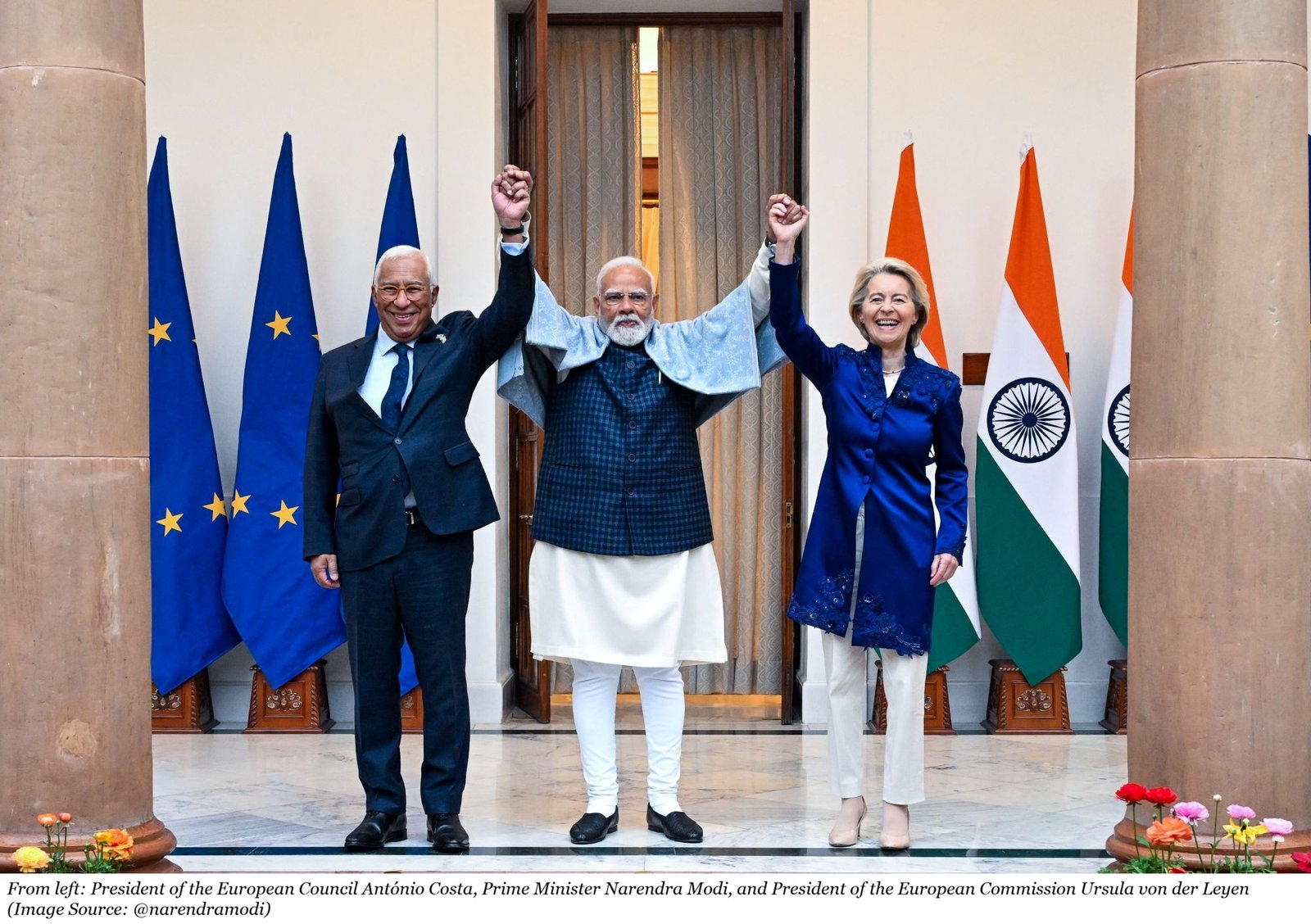
The India–European Union Free Trade Agreement (FTA) represents a significant step in strengthening economic and strategic ties between two major global actors. Negotiations aim to enhance trade, investment flows, regulatory cooperation, and market access while addressing emerging issues such as sustainability, digital trade, and supply chain resilience. The agreement is not only an economic arrangement but also reflects broader geopolitical considerations in an evolving multipolar world.
Background and Evolution
India and the European Union launched negotiations for a Broad-based Trade and Investment Agreement (BTIA) in 2007. However, talks stalled due to disagreements over tariffs, intellectual property rights, services liberalization, and regulatory standards. In recent years, both sides have revived negotiations, recognizing mutual benefits amid shifting global trade patterns, supply chain disruptions, and the need to diversify economic partnerships.
Economic Significance
The EU is one of India’s largest trading partners, and India represents a large and growing market for European goods and services. An FTA could reduce tariffs on industrial products, improve access for agricultural exports, and facilitate services trade, particularly in sectors such as information technology, finance, and professional services. Increased investment flows could support infrastructure development, manufacturing expansion, and job creation in India while providing European firms access to a dynamic consumer base.
Key Areas of Negotiation
Market access remains a central issue, with the EU seeking lower tariffs on automobiles, wines, spirits, and industrial goods, while India seeks easier movement of professionals and recognition of qualifications. Regulatory cooperation on standards, sanitary and phytosanitary measures, and technical barriers to trade is also crucial. Additionally, negotiations address intellectual property protection, public procurement, digital trade rules, and sustainable development commitments.
Challenges and Points of Contention
Several challenges complicate negotiations. India is cautious about reducing tariffs in sensitive sectors to protect domestic industries and farmers. Concerns about stringent EU regulations, including environmental and labour standards, create apprehension regarding compliance costs. Differences over data protection rules and carbon border adjustment mechanisms also pose hurdles. Balancing economic liberalization with domestic policy priorities remains a delicate task for both sides.
Strategic and Geopolitical Dimensions
Beyond economics, the FTA has strategic implications. Strengthening India–EU ties can contribute to a rules-based international order and reduce dependence on any single market. For the EU, engagement with India aligns with its Indo-Pacific strategy and efforts to deepen partnerships with like-minded democracies. For India, closer ties with Europe complement its broader foreign policy objectives of diversification and strategic autonomy.
Potential Benefits
A successful agreement could boost bilateral trade volumes, enhance competitiveness, and promote technology transfer. It could support India’s integration into global value chains and help European firms expand operations in Asia. Cooperation in areas such as green technology, renewable energy, and digital innovation could also advance shared sustainability goals.
Concerns and Criticisms
Critics argue that trade liberalization may expose vulnerable sectors to increased competition. Small and medium enterprises may face adjustment pressures, and concerns exist regarding regulatory sovereignty and policy space. Ensuring that gains are distributed equitably and accompanied by supportive domestic reforms will be essential.
Way Forward
To conclude negotiations successfully, both sides must adopt a pragmatic approach, focusing on incremental progress and mutual flexibility. Addressing sensitive issues through phased commitments, capacity building, and dialogue can help bridge differences. Continued political engagement and stakeholder consultation will be key to building consensus and sustaining momentum.
Conclusion
The India–EU FTA holds the potential to deepen economic integration, strengthen strategic cooperation, and contribute to global economic stability. While challenges remain, constructive negotiations and balanced compromises can pave the way for a comprehensive agreement that supports growth, resilience, and partnership in an increasingly interconnected world.