


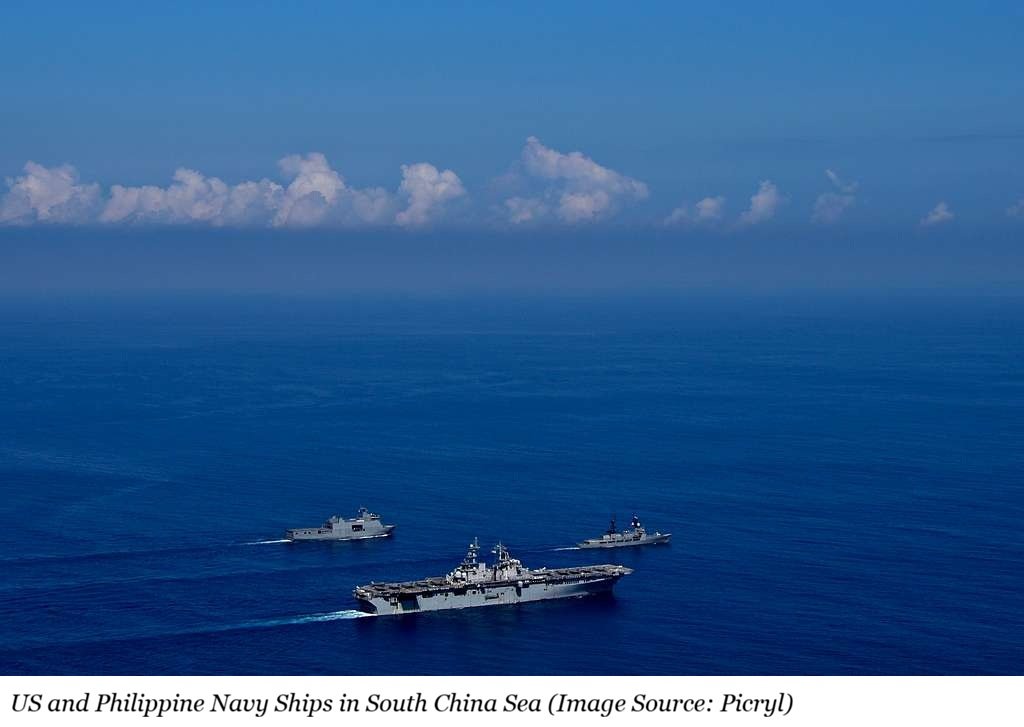
The South China Sea dispute is one of the most complex geopolitical conflicts in the contemporary world. It involves multiple claimants including China, Vietnam, the Philippines, Malaysia, Brunei, Taiwan, and Indonesia, each asserting sovereignty over islands, reefs, and maritime zones. The conflict is driven by overlapping territorial claims, competition over natural resources, strategic considerations, and major power rivalry, particularly between China and the United States.
The South China Sea is strategically significant because it connects the Pacific and Indian Oceans and serves as one of the busiest maritime trade routes globally. Nearly one-third of global shipping passes through this region, carrying goods worth trillions of dollars annually. Control over this sea allows countries to secure trade routes, project naval power, and influence regional security dynamics.
Economically, the region is rich in natural resources. It is believed to contain significant reserves of oil and natural gas beneath its seabed, as well as abundant fisheries that provide livelihoods and food security to millions in Southeast Asia. These economic incentives intensify competition among claimant states, as control over maritime zones translates into rights to exploit these valuable resources.
Historically, disputes date back to the mid-twentieth century. After World War II, competing claims emerged over island groups such as the Spratly and Paracel Islands. China’s claim is based on the “nine-dash line,” which asserts historical rights over most of the sea. Other countries rely on modern international law, particularly the United Nations Convention on the Law of the Sea (UNCLOS), which defines maritime zones such as territorial seas and exclusive economic zones.
The positions of claimant states vary. China claims the majority of the South China Sea, arguing historical ownership and strategic necessity. Vietnam claims sovereignty over both the Spratly and Paracel Islands, while the Philippines asserts rights over parts of the Spratly Islands and Scarborough Shoal. Malaysia and Brunei claim southern portions based on their exclusive economic zones, and Taiwan maintains claims similar to those of China.
The region has witnessed several serious clashes over the decades. Military confrontations between China and Vietnam occurred in 1974 and 1988, resulting in casualties and heightened tensions. Standoffs between China and the Philippines, including incidents at Scarborough Shoal, have also underscored the risk of escalation. More recent confrontations involve aggressive manoeuvres, maritime militia activities, and accusations of harassment at sea.
Several factors drive the dispute. Overlapping territorial claims create legal and political ambiguity. Economic interests in hydrocarbons and fisheries fuel competition. Strategic considerations encourage militarization, as countries seek to strengthen their presence through naval deployments and construction of facilities. External involvement, especially by the United States through freedom of navigation operations, further complicates the situation by introducing great power rivalry.
International law plays a central role in attempts to manage the conflict. UNCLOS provides the legal framework for defining maritime rights and resolving disputes. In 2016, an arbitration tribunal ruled that China’s nine-dash line claim had no legal basis under international law and that certain features did not qualify as full islands. However, China rejected the ruling, highlighting challenges in enforcing legal decisions when major powers disagree.
Efforts to resolve the dispute through diplomacy have had limited success. Mechanisms such as regional dialogues and codes of conduct aim to reduce tensions, but conflicting national interests and strategic calculations hinder meaningful progress. The increasing militarization of the region raises concerns about accidental conflicts and long-term instability.
In conclusion, the South China Sea dispute represents a complex interplay of territorial ambitions, resource competition, strategic rivalry, and legal challenges. Its resolution requires sustained diplomatic engagement, respect for international law, and cooperative security arrangements. Given its global economic and strategic importance, maintaining peace and stability in the South China Sea remains a critical priority for the international community.