


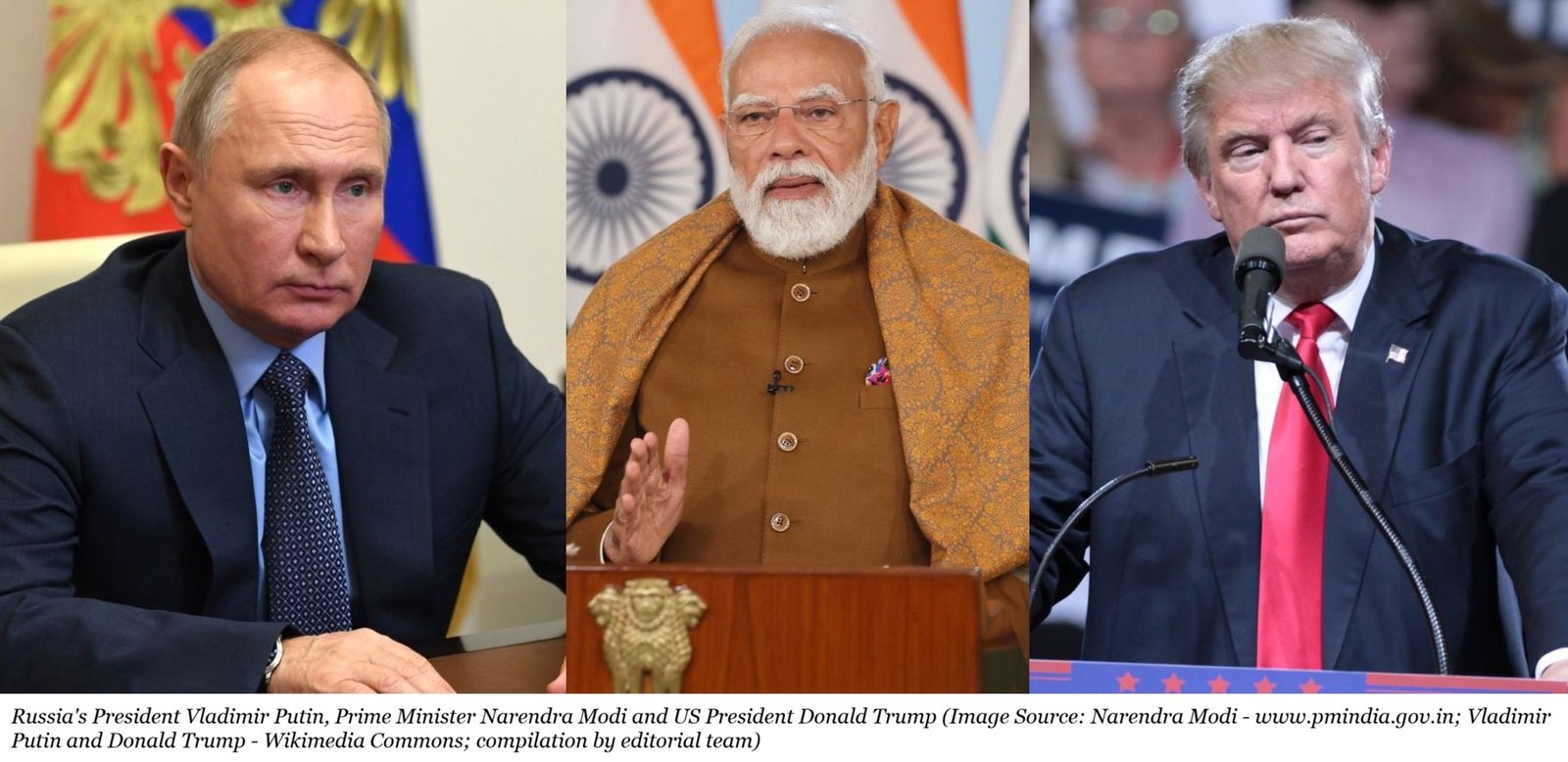
India has traditionally pursued a foreign policy based on strategic autonomy, avoiding alignment with any single global power while maintaining friendly relations with multiple countries. This approach has allowed India to safeguard its national interests, maintain independence in decision-making, and assert itself as a major player on the global stage. In the contemporary geopolitical context, India faces a complex challenge: balancing its relations with the United States and Russia, two powerful nations with diverging global agendas.
Historical Context of India-Russia Relations
India’s relationship with Russia (formerly the Soviet Union) spans over seven decades and has been anchored in defence cooperation, energy partnerships, and diplomatic alignment. The Soviet Union provided political and economic support to India during crucial moments, such as the Indo-Pakistani wars and India’s early industrial development. Even after the collapse of the Soviet Union in 1991, Russia remained one of India’s closest strategic partners.
Defence cooperation forms the backbone of this relationship. Russia supplies a significant portion of India’s military equipment, including fighter jets, tanks, submarines, and missiles. Notably, aircraft such as the Su-30MKI fighter jets and the S-400 missile defence system reflect the high level of military collaboration between the two countries. Beyond defence, India imports energy resources from Russia, including crude oil and nuclear technology. Russia also consistently supports India on key international issues, including United Nations Security Council reforms and regional stability.
However, India’s ties with Russia are not without challenges. Global criticism of Russia’s recent actions, particularly in Ukraine, has put India in a delicate position. While Western nations, including the US, have imposed sanctions on Russia, India has continued to maintain a pragmatic relationship, emphasizing national interest and energy security over external pressures.
The Rise of the India-US Strategic Partnership
Parallel to its historic relationship with Russia, India has cultivated a strong strategic partnership with the US converging on shared security concerns, especially in the Indo-Pacific Region.
Trade and investment are central to the India-US partnership. Bilateral trade exceeds $142 billion annually covering sectors like information technology, pharmaceuticals, and defence. In addition, the US is a key partner in technology transfer, civil nuclear energy, and high-end manufacturing, which are critical for India’s economic modernization. Strategic dialogues such as the 2+2 Ministerial Dialogue reinforce cooperation in defence and counterterrorism, while expanding joint military exercises like Malabar strengthens interoperability between the two nations’ armed forces.
Yet, India’s engagement with the US also requires careful diplomacy. Washington occasionally pressures New Delhi to align with its global policies, particularly regarding energy imports from Russia or trade practices. India, while valuing the US partnership, continues to prioritize independent decision-making over adopting a zero-sum alignment strategy.
The Challenges of Balancing Two Powers
India’s balancing act involves navigating a delicate set of challenges. Maintaining strong ties with both Russia and the US can sometimes create conflicting expectations. For example, India’s purchase of discounted Russian oil attracted criticism from Western nations, while its growing defence and trade ties with the US signal alignment with a Western strategic framework.
India addresses this by emphasizing its multi-alignment strategy — engaging with both countries based on mutual interests rather than ideological alignment. High-level diplomatic channels, defence dialogues, and multilateral forums such as BRICS, G20, and the Shanghai Cooperation Organization provide platforms for India to maintain relations with multiple powers without compromising its autonomy.
Strategic and Regional Implications
India’s foreign policy balancing act is not limited to bilateral relations; it also has significant regional and global implications. By maintaining strong ties with Russia, India ensures its defence capabilities remain robust, which is crucial for regional security in South Asia and the Indian Ocean. Cooperation with Russia also allows India to diversify energy sources, safeguarding against global energy crises.
At the same time, the US partnership allows India to participate actively in Indo-Pacific security frameworks, enhancing maritime security and countering the influence of rising powers like China. By engaging with both Russia and the US, India positions itself as a bridge between competing global interests, reinforcing its role as a responsible and influential power.
India’s Multi-vector Diplomacy
India’s approach is often described as “multi-vector diplomacy.” It avoids exclusive alignments and treats relationships on a non-zero-sum basis. This strategy enables India to leverage the advantages of both partnerships: modern technology, trade, and democratic cooperation with the US, alongside military hardware, energy security, and diplomatic support from Russia.
For instance, India continues to procure Russian defence equipment while simultaneously conducting joint naval exercises with the US and its allies. This dual engagement demonstrates India’s pragmatism and foresight in managing global pressures while advancing national interests.